


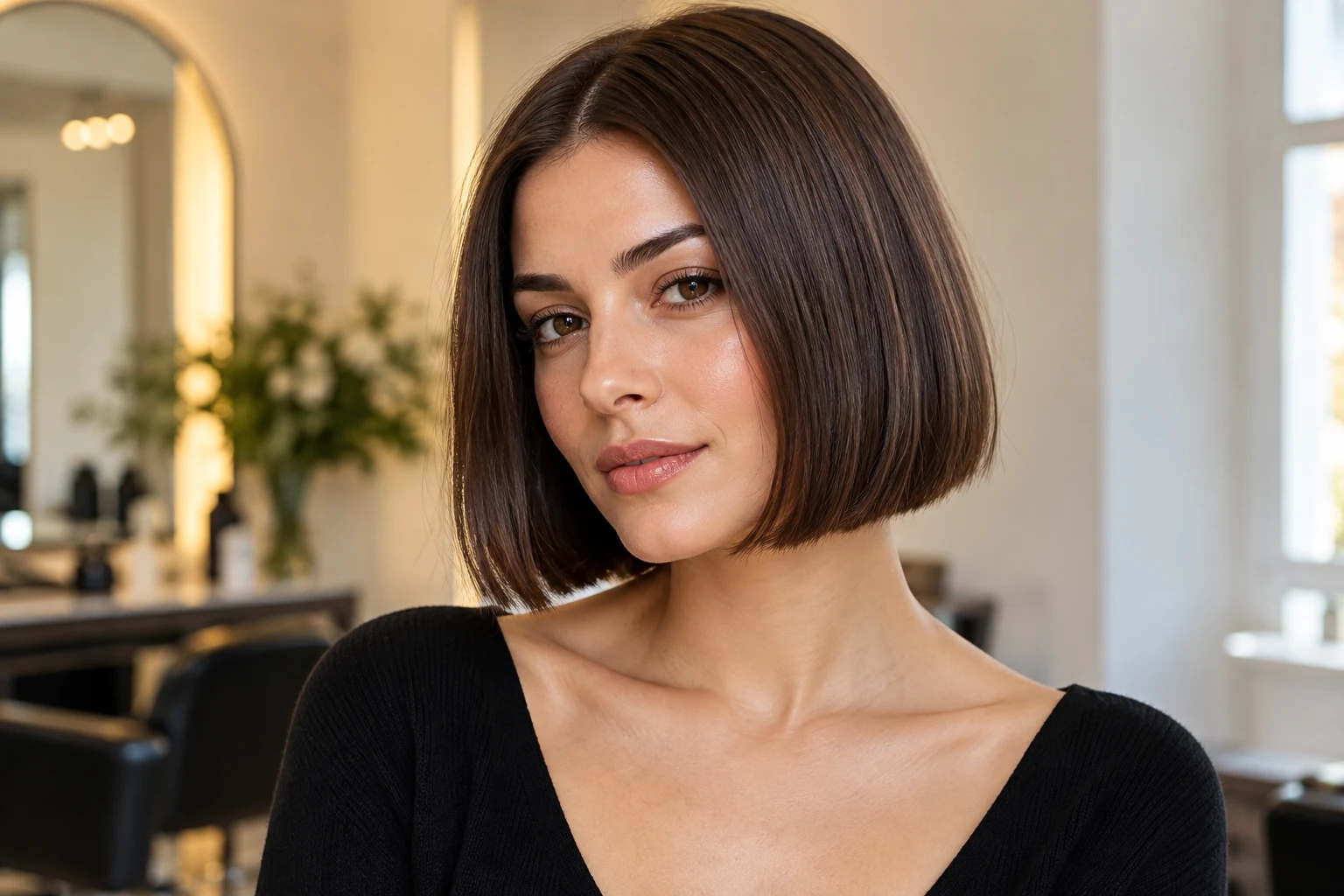
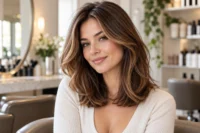
A blunt bob haircut is defined by a strong, relatively continuous-looking edge. That visible perimeter is the main decision. The exact jaw, neck or shoulder length, the fringe and any internal adjustment should be agreed separately with your stylist.
A sharp-looking outline does not require everyone to wear pin-straight hair. Waves and curls change how the line appears, and the cut should be assessed in the finish you actually intend to wear.
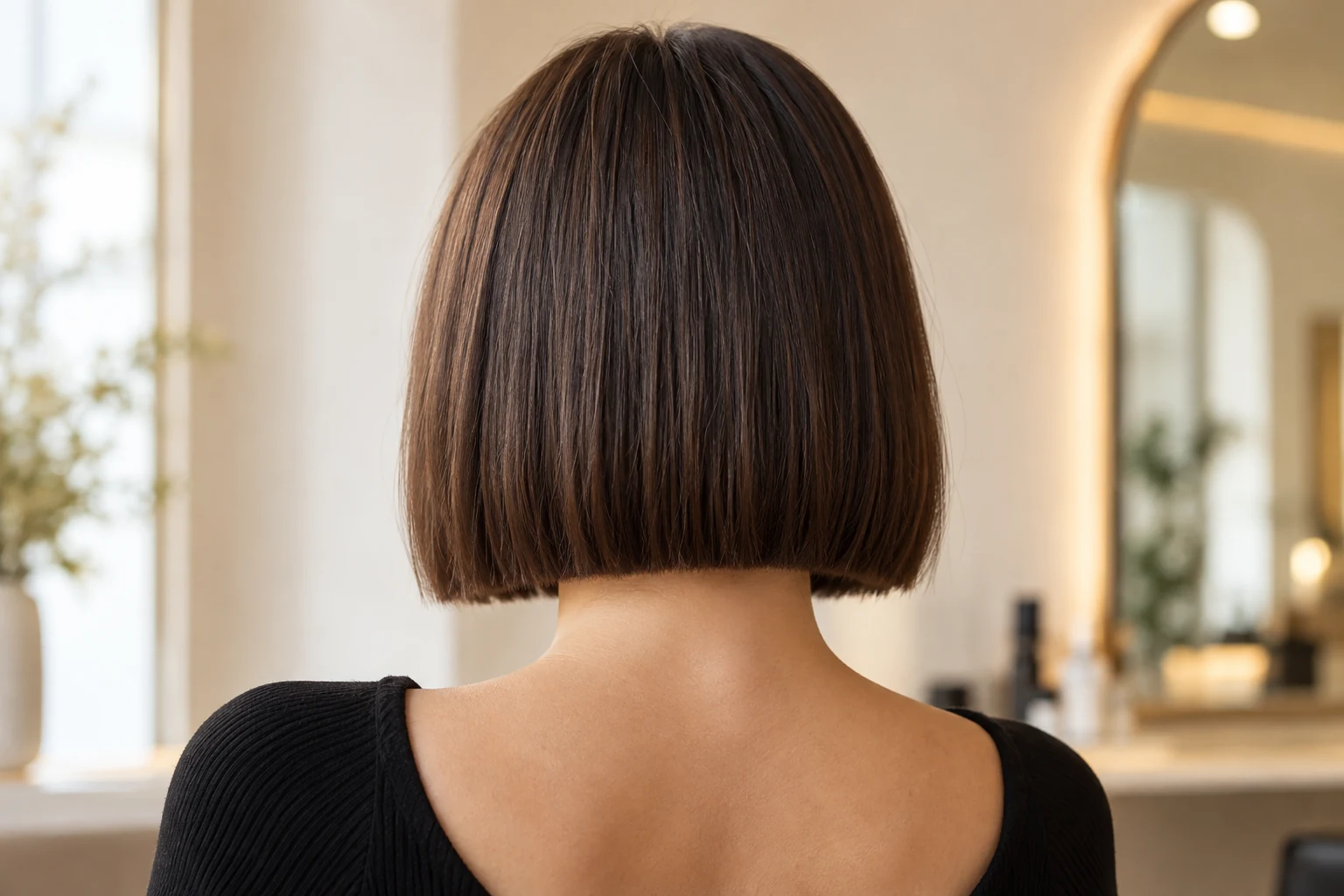
Describe the edge you want to see
Look at the bottom of your reference rather than just the model’s face. Does the edge look dense and solid, softly broken, curved under, or angled toward the front? The first describes the perimeter; the others may involve cutting choices, styling choices or both.
L’Oréal Paris defines a blunt cut around its uniform end line. In a consultation, it is still worth asking what the stylist means by “blunt.” Some cuts retain a blunt-looking outer edge while using an internal adjustment that is not obvious in the photograph.
Agree on the dry length
Point to where the edge should sit when your hair falls naturally. Ask to see the front and back together. A jaw-level front with a much shorter back is a different brief from a level bob with a similar length around the head.
If you are deciding how short to go, our short and medium haircut references can help describe the silhouette. The examples are options, not age requirements.
Ask what should stay at the perimeter
If the ends currently look sparse, explain that keeping a substantial-looking edge is a priority. Ask what existing shorter layers will still be visible after the cut. Shortening the overall length does not instantly make all those layers meet the edge.
If your hair is dense, ask the stylist to explain any proposed weight adjustment before doing it. You may want a full line without a heavy interior, but the amount and location of removal should be personal to the hair in front of them. “Thin it out everywhere” is not a precise instruction.
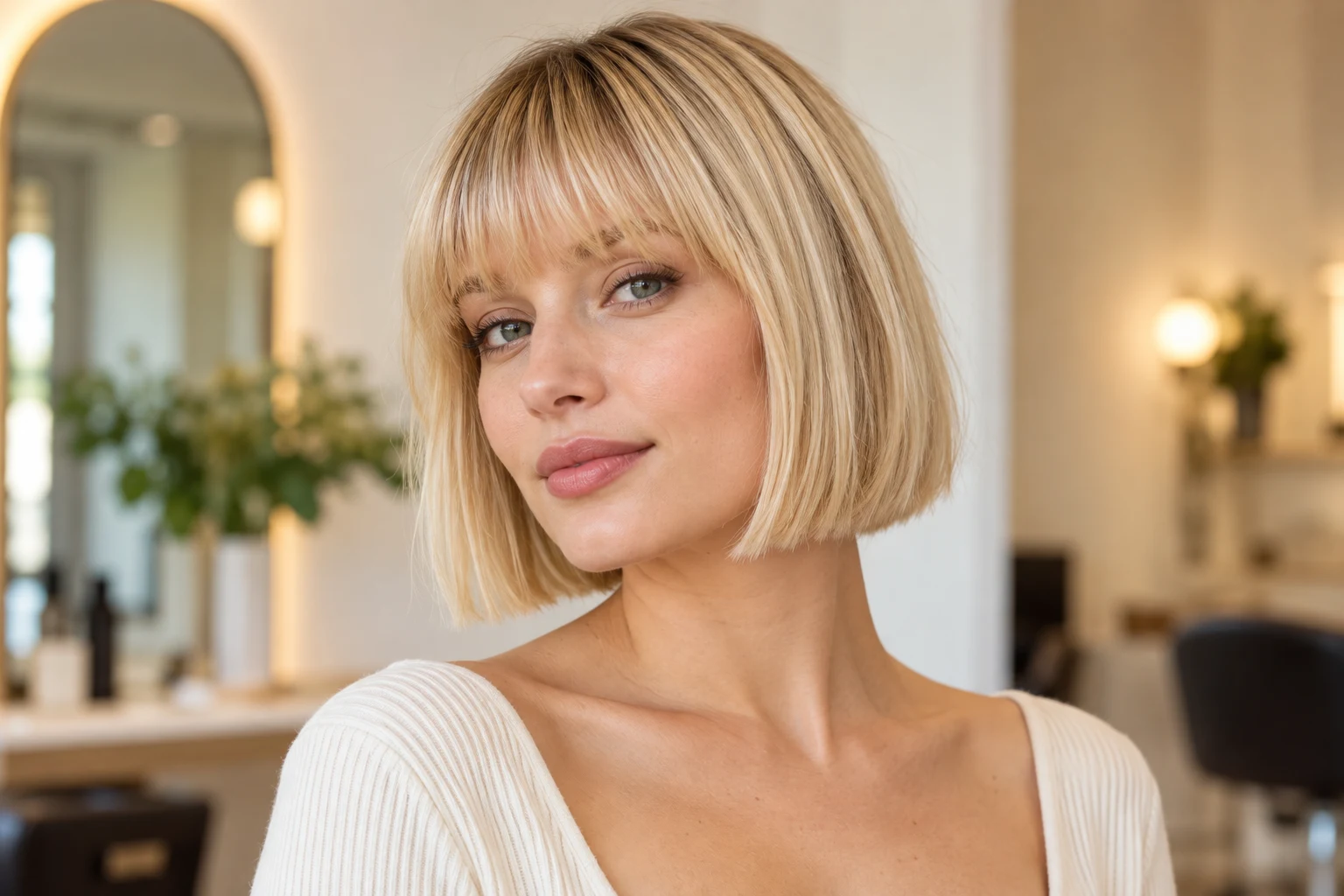
Make the fringe a separate choice
- No fringe: decide how the part and front length frame the face.
- Long parted fringe: identify how its sides will connect to the bob.
- Shorter straight-across fringe: choose its own dry length and density.
- Side-swept front: show which side you normally wear it on.
Do not assume a blunt perimeter requires a blunt fringe. Bringing two front references is often useful: one for the bob edge and one for the fringe.
Choose the everyday finish before the cut
Tell the stylist how often you intend to air-dry and whether a smooth blow-dry is occasional or daily. Ask to see the shape in your normal texture. A cut you like only after substantial smoothing may involve more work than the inspiration photo suggests.
For a smooth finish, work in manageable sections and guide the ends in the direction you prefer. For waves or curls, use your established defining routine and assess the outline without pulling the pattern straight. Ask for help if one side behaves differently rather than immediately trimming it yourself.
Upkeep: use a visible trigger
Decide what “needs a trim” means for you. It might be losing the jaw-level shape, reaching the shoulders, or an edge that no longer falls cleanly. Ask the stylist for an appointment plan based on that goal rather than taking a fixed interval from someone else’s haircut.
Also note your usual habits. Tucking one side behind an ear, wearing a scarf or sleeping on one side can change the way the ends are arranged. Check the hair in its ordinary position before deciding that the cut is uneven.
A salon brief
“I want a blunt-looking bob edge at [dry landmark], with [level/angled] front and back. My priority is [a full-looking perimeter/a soft end bend/natural texture]. Please explain any internal layering or weight removal first. I want [fringe choice] and need [specific clipping or tie-back option].”
To compare this silhouette with other retro cuts, see our 90s haircut guide.
Common questions
Does a blunt bob make hair grow thicker?
No. A fuller-looking edge is a visual effect of the haircut, not a change in hair growth.
Can curls have a blunt-looking outline?
Yes. Agree on the dry silhouette with a stylist comfortable with your curl pattern rather than judging the result while it is stretched.
Can I add layers later?
You can discuss changing the structure later. Restoring the same solid-looking edge after adding short layers may require a grow-out period.




Leave a comment