



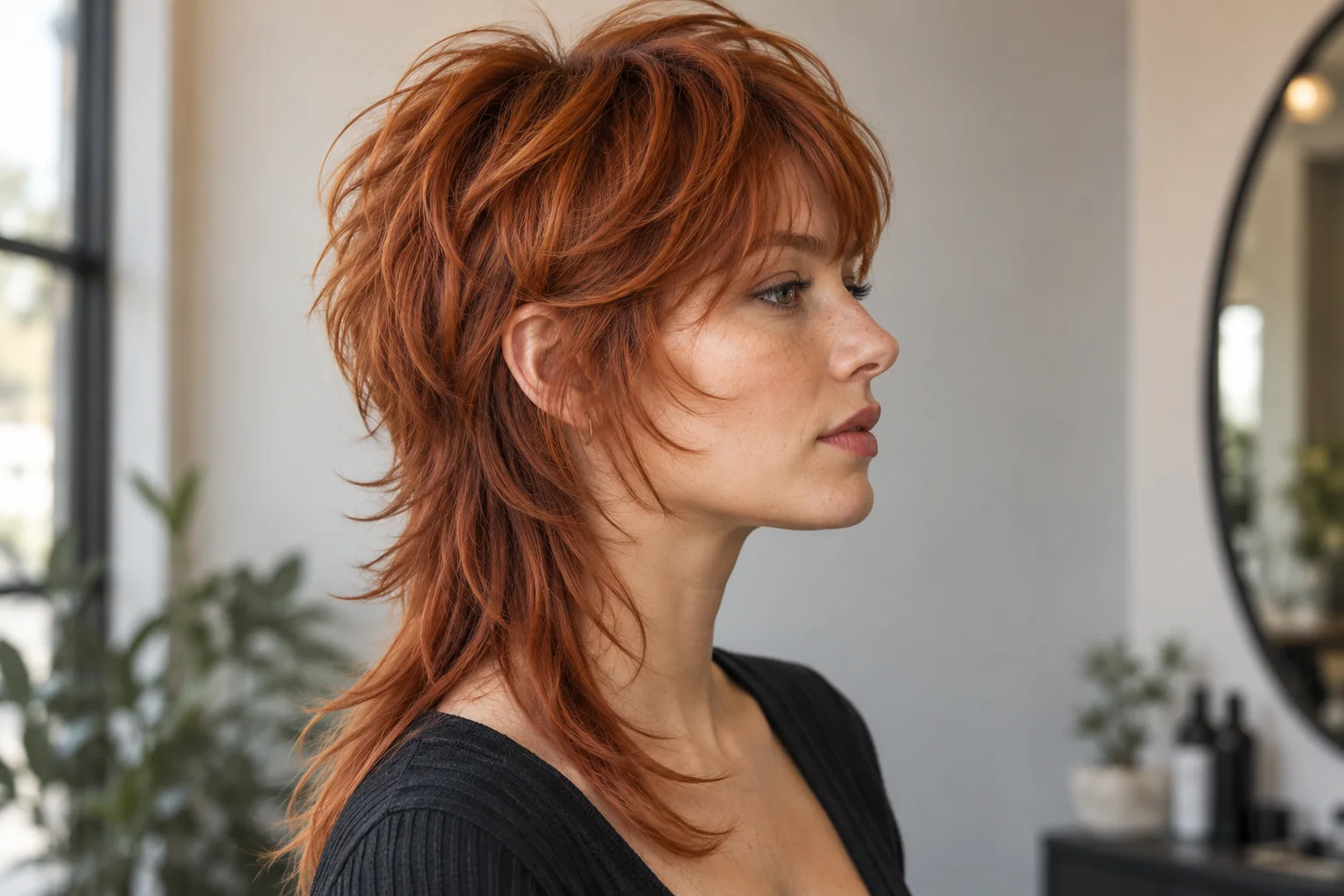
A wolf haircut combines short, separated layers around the crown with a longer back and a lighter perimeter. The contrast can be subtle or strongly mullet-like. Choose the shortest top layer and the amount of nape contrast before deciding how messy the finish should look.
Make it work for you
Choose your starting point
Select the situation closest to yours for a practical next step.
I want a subtle wolf shape: Ask for longer crown layers and a softly connected nape. Bring a side reference that shows the maximum contrast you want.
I want a dramatic short-top silhouette: Specify crown shortness, ear exposure and nape length separately. Check what the shortest pieces will do in your natural texture.
I want to grow it into a shag: Discuss preserving the crown and side length while adjusting the nape selectively. Explain that you are reducing the contrast.
Your preparation card
Check before you start
Tick each item as you work through it. Your selections stay on this page and reset when it is reloaded.
0 of 5 complete
Define the silhouette before the texture
A wolf cut is often described as a shag-and-mullet blend. That description does not tell a stylist whether you want a soft rounded crown or an obvious short-top, long-back outline. View your reference from the side, where the relationship is clearest.
Separate the cut from the styling. A photo with teased roots or curled ends can make layers look much more dramatic. Ask what the outline would do in your normal texture. Our grunge hairstyle guide gives the wider styling context; this page focuses on the cut itself.
Make four decisions with your stylist
Crown length
Ask to see the proposed shortest piece held against your head. Consider whether it will stand up, curl, fall flat or reach a tie. Keeping total back length does not preserve every styling option.
Sides and ear coverage
Choose whether the ear remains covered, partially exposed or visibly outlined. Strongly shortened sides create more separation from the nape. Glasses and tuck-back habits belong in this discussion.
Nape length
Show the minimum back length you want and how full the lower edge should remain. A long thin tail and a broader layered nape are different requests.
Fringe
Choose a short forward fringe, a longer parted front or no separate bangs. The fringe does not have to be as short as the crown.
Adapt the shape to density and texture
On low-density ends, extensive texturizing can make the perimeter look thinner. Ask which areas should retain weight and whether longer layers would achieve enough movement. On dense hair, discuss targeted bulk removal rather than thinning every section.
On straight hair, the contrast can look graphic and may need styling to show separated movement. Waves and curls can make the crown look shorter and fuller. Agree on the worn length, not only the length when the hair is stretched.
Growth direction matters at the crown and front. Show your hair before it is forced into a different part. A short layer can reveal a swirl that a longer style concealed.

Build a repeatable finish
- Arrange the part and fringe while the hair is in the starting condition your routine uses.
- Encourage your natural wave or curl with your usual method, or guide straight sections in the direction you want.
- If using a dryer, keep the airflow moving and use the lowest effective heat.
- Once dry, define selected pieces with a small amount of a suitable styling product.
- Check the side profile. Add separation only where you want it, rather than coating every layer.
Ask your stylist to demonstrate an understated finish as well as the dramatic reference. If you do not want daily tool work, say so before the layer lengths are chosen.
Maintenance and grow-out
The short crown and long nape grow into different proportions. If you want a stronger contrast, reshaping may focus on the top and sides. If you want to soften the cut, preserve those areas and discuss a selective nape adjustment instead.
There is no single trim schedule for everyone. Use visible changes as prompts: fringe blocking your view, the crown losing separation, or the back feeling too tail-like. Tell the stylist whether you are maintaining the original silhouette or growing toward a shag.
Do not copy a one-ponytail cutting shortcut from a short clip. Your sectioning, density and growth pattern determine where the shortest pieces land, and a single view cannot show how the back connects.
Common questions
Is a wolf cut only for women or men?
No. The decisions are about length, texture and outline. Bring references that match the shape you want rather than relying on a gender label.
Can I keep the front long?
Yes. Ask for a long face frame or parted fringe and make clear that the crown length does not define the front length.
Will it work on thin hair?
It needs an individual assessment. Preserving weight at the ends may matter more than strong crown contrast or extensive texturizing.
Related guides
- Grunge Hairstyles for Men: 10 Cuts and Styling Ideas
- 90s Haircuts: A Guide to Layers, Bobs, Curtains and Shags
- The Curtains Haircut for Men: Length and Styling Choices
Sources and further learning
External references explain the underlying techniques or haircut terminology. The chooser is a starting point for practice or a salon conversation. Images are AI-generated references, not a documented step-by-step salon demonstration.



Leave a comment