


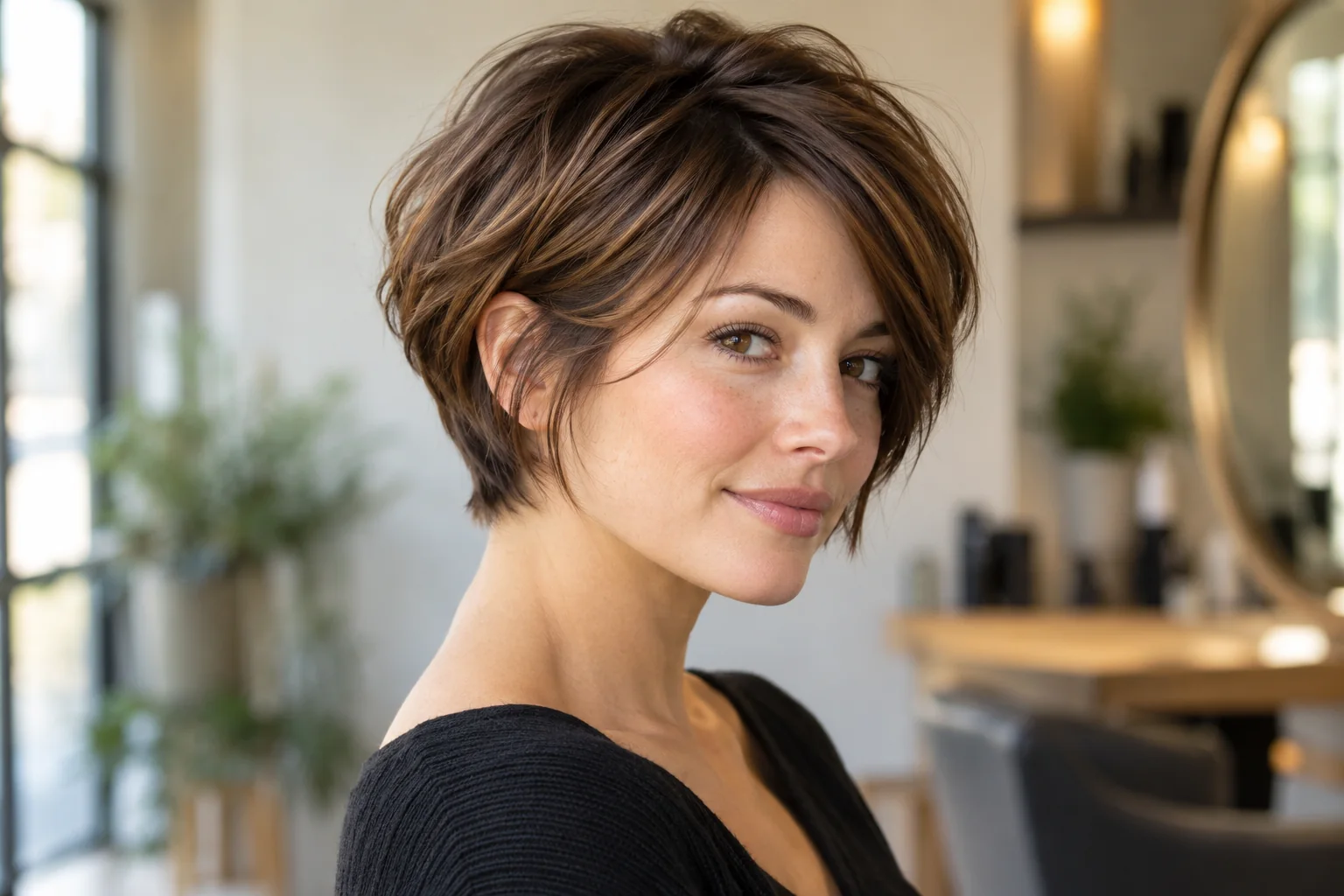
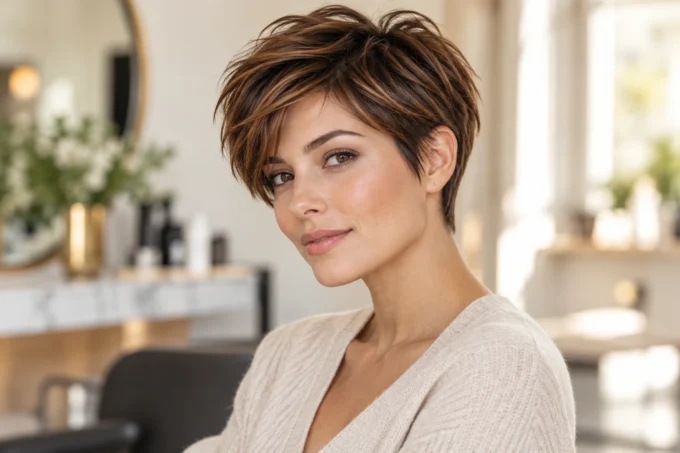
A bixie haircut combines a bob’s softer outline with the shorter layers of a pixie. The label covers several shapes, so “give me a bixie” is only the beginning of a consultation. Agree on ear coverage, the shortest crown layers and the nape before deciding how textured the finish should look.
Make it work for you
Choose your starting point
Select the situation closest to yours for a practical next step.
I want to tuck behind my ears: Ask for enough side length to tuck and view the cut untucked too. A longer bixie or short layered bob may fit this requirement.
I want a clearly short neckline: Compare a tapered bixie nape with the pixie guide. Specify how much skin you want visible.
I am growing out a pixie: Preserve side and top length while discussing a selective nape tidy-up. Do not automatically shorten every area again.
Your preparation card
Check before you start
Tick each item as you work through it. Your selections stay on this page and reset when it is reloaded.
0 of 5 complete
What makes a bixie different from a bob or pixie?
A bob usually keeps a clearer lower perimeter. A pixie can leave much more of the ears and nape exposed. A bixie often sits between those outlines: some softness around the ears, shorter interior layers and enough length on top to change the direction.
There is no fixed centimeter measurement that makes a cut a bixie. A softly grown-out pixie and a highly layered short bob can overlap. Use the name to locate references, then discuss the actual shape. Compare our pixie consultation guide and layered bob guide if you are deciding how short to go.
Choose the outline in three places
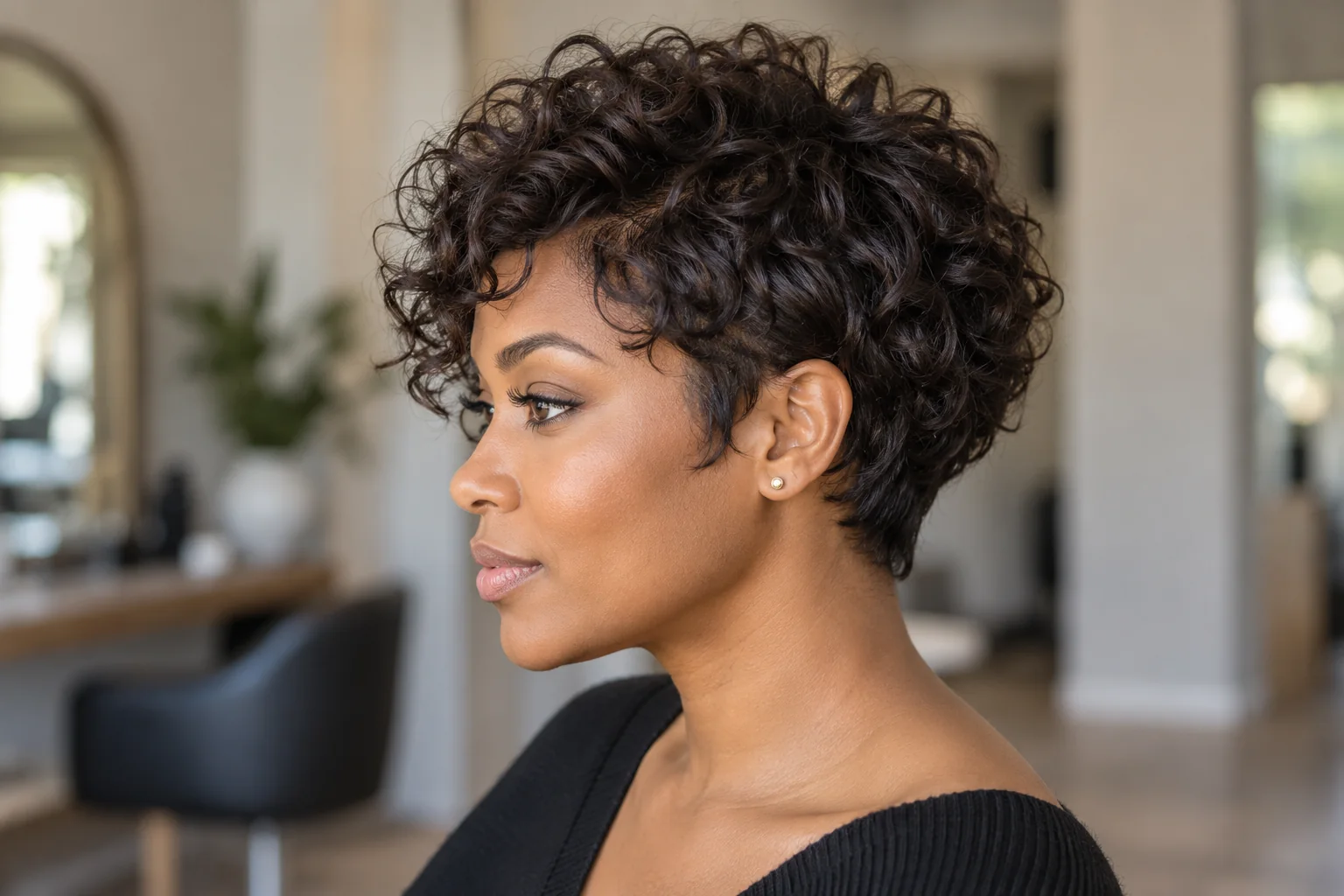
Around the ears
Decide whether the lower ear should show, whether pieces should tuck behind it, and what happens when you wear glasses. A tucked reference can hide how long the side actually is, so ask to see the untucked outline too.
At the nape
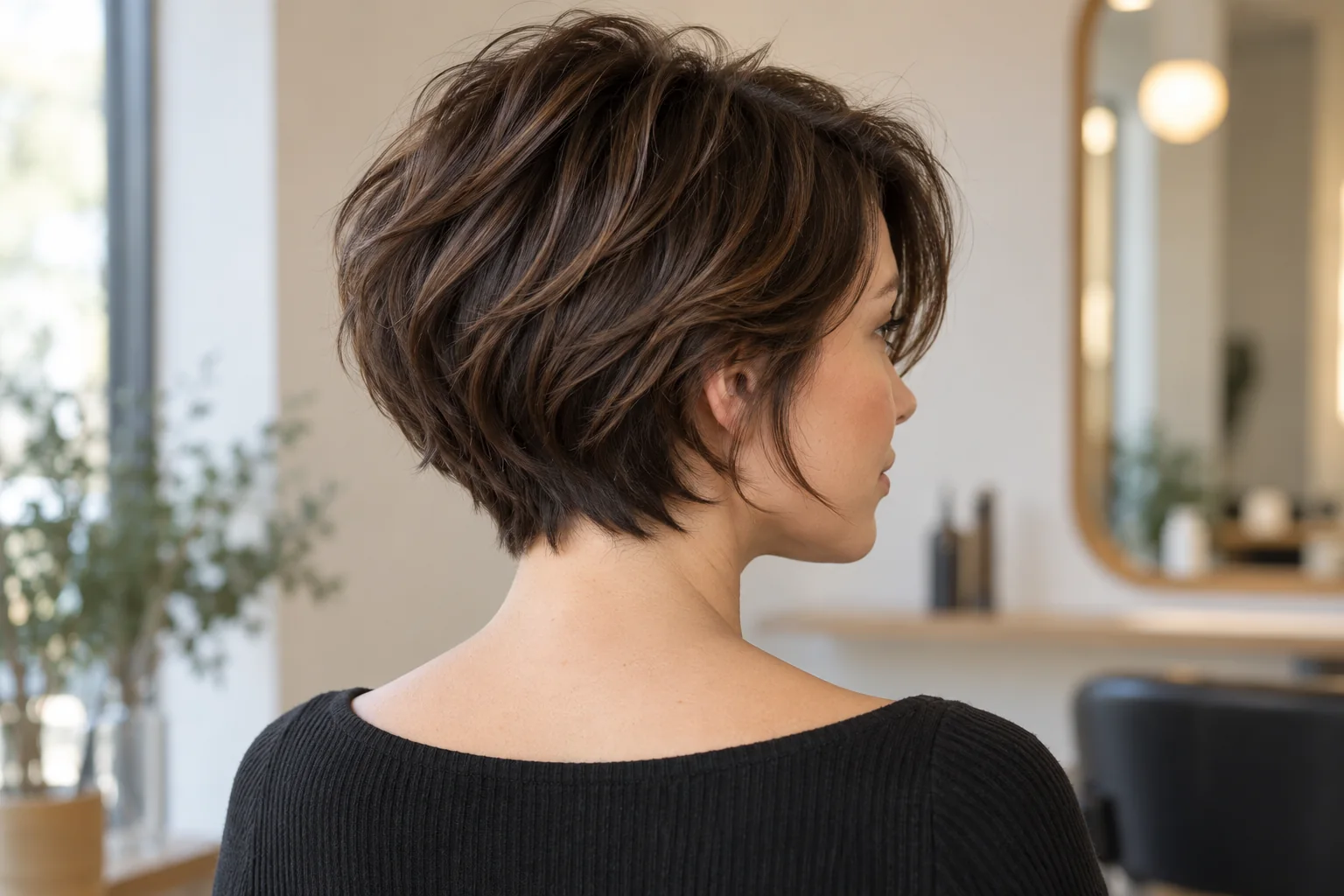
A close tapered edge looks different from soft feathered pieces. A longer nape can feel more flexible but may flip against collars. Show your stylist how your hair grows at the neckline before it is smoothed into a different direction.
Through the crown
Shorter layers can create separation and movement. They can also stand up or expose more scalp between sections. Ask the stylist to show the proposed shortest length before cutting, particularly if you want a fuller, quieter outline.
Match the cut to the finish you actually wear
For straight hair, examine the perimeter without a heavily tousled finish. Strong separation in a salon photo may come from styling product rather than the cut alone. For wavy hair, look at where the shortest layers bend; an outward flick can become part of the silhouette.
For curls and coils, agree on the visible length in the finished pattern. A stretched piece is not a reliable reference for everyday ear coverage. If you wear both stretched and natural finishes, show both. The goal is a useful cut in your routine, not an exact copy of a differently textured model.
On lower-density hair, discuss which areas should retain weight before asking for extra texturizing. On dense hair, discuss bulk placement rather than requesting thinning everywhere. Density and strand thickness are different considerations.
A realistic daily routine
- Arrange the front in your usual part before adding product.
- Let the sides fall naturally and check whether you prefer them tucked or loose.
- If using a dryer, guide the roots in the intended direction with moving airflow and the lowest effective setting.
- Once dry, use a small amount of a suitable styling product only where you want separation.
- Check the back with a second mirror. Avoid flattening the crown simply because the front looks finished.
Ask for one demonstration you can repeat with your own tools. If the reference needs a round brush every day and you air-dry, request an alternative finish before committing.
Plan the grow-out before the appointment
Different areas reach awkward stages at different times. The nape may lengthen before the sides reach a bob outline. Ask which area to keep tidy while the rest grows. A short fringe also takes longer to join the side than a longer swept fringe.
There is no universal trim interval. Decide what would prompt your next visit: the ear outline losing shape, the nape catching a collar, or the front falling into your eyes. Budget and willingness to restyle matter as much as the name of the cut.
A useful brief is: “Keep softness over the upper ear, leave the front long enough to sweep across, and show me a neat but unshaved nape. I want to wear my natural texture most days.” Replace each detail with your own preference.
Common questions
Will a bixie add volume?
Layers change where the hair sits; they do not create more hair. The result depends on your density, growth direction and styling.
Can I keep a side part?
Yes. Show the part you normally wear so the front and side lengths can be planned around it.
Is it a low-maintenance haircut?
It can be easy to style, but a short outline may need frequent reshaping if you like it precise. Discuss your preferred finish and appointment habits.
Related guides
- Pixie Haircuts: Fringe, Ear Coverage and Nape Choices
- Layered Bob Haircut: Where the Layers Sit and What They Change
- Bob vs Lob: Compare Length, Upkeep and Tying Back
Sources and further learning
External references explain the underlying techniques or haircut terminology. The chooser is a starting point for practice or a salon conversation. Images are AI-generated references, not a documented step-by-step salon demonstration.






Leave a comment