


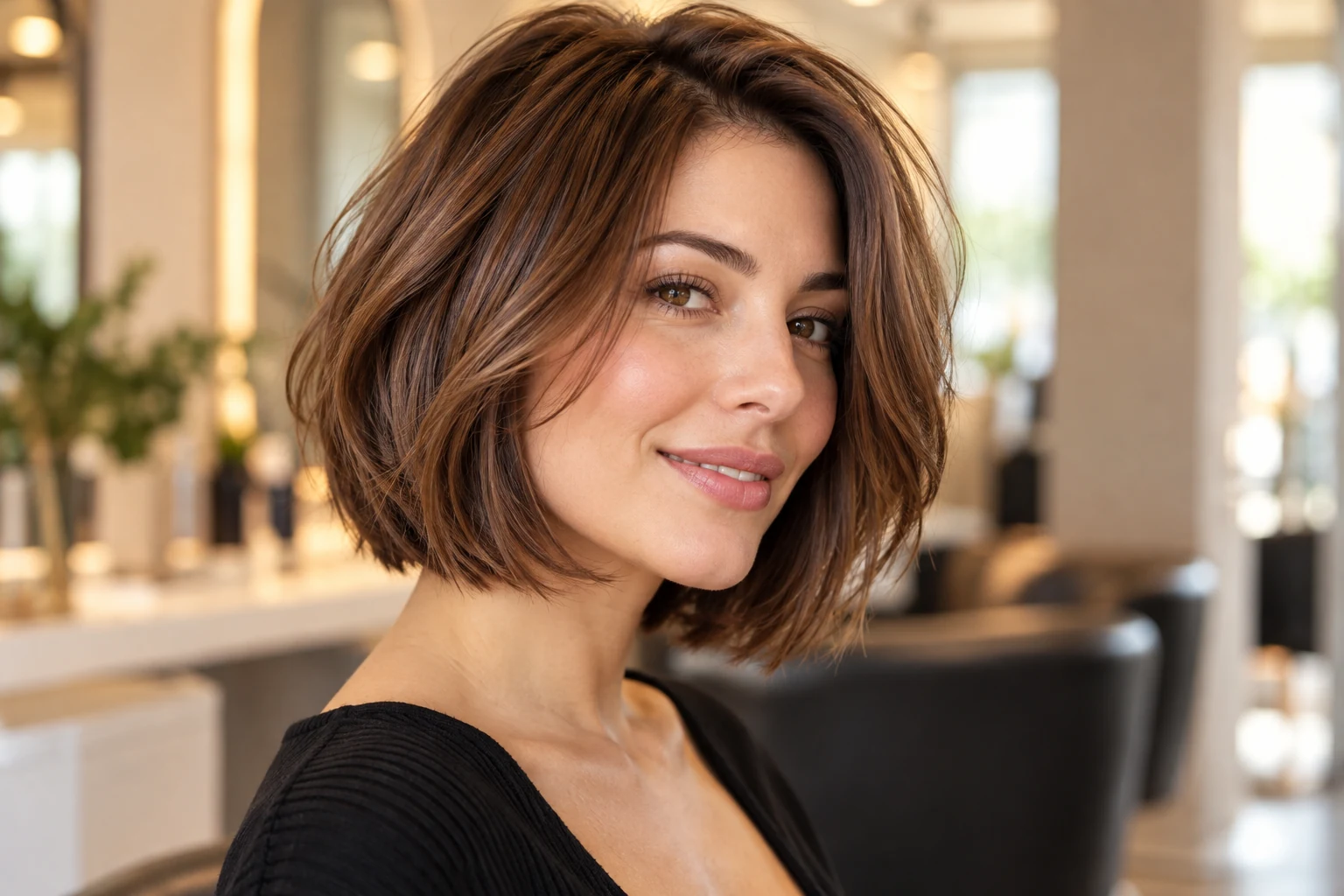
A layered bob haircut combines a bob-length outline with shorter sections inside or around it. What changes the result is where those shorter pieces begin, how they connect and how much of the outer edge remains. “Add layers” is a starting request, not a complete haircut plan.
This page focuses on the layer pattern. The perimeter length, fringe and any front-to-back angle should still be decided separately.
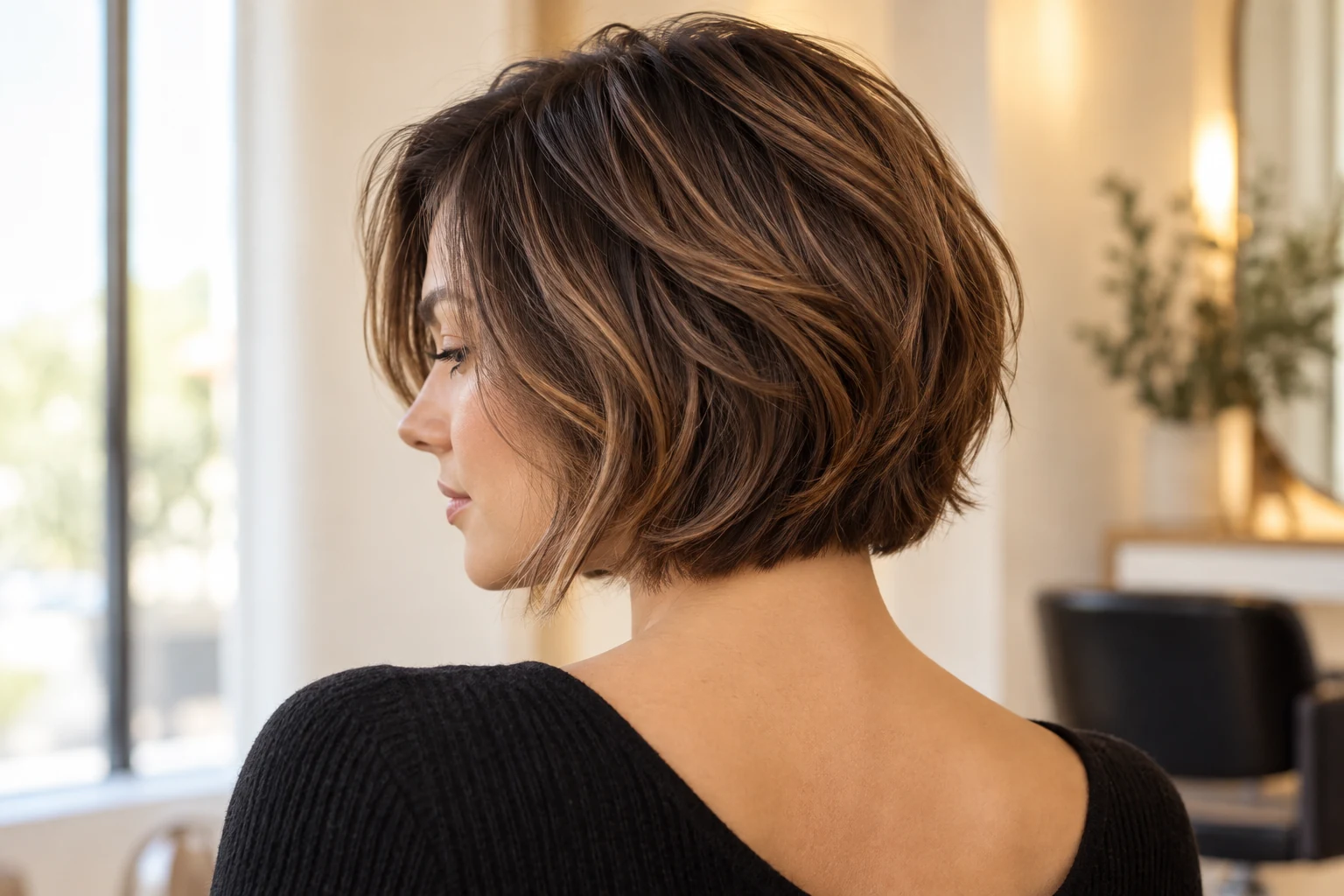
Identify the job you want the layers to do
Choose one main reason before collecting more references. You may want a fuller-looking crown, a less heavy side area, a softer front or more visible separation through waves. Those are different places to work.
John Frieda describes layering as using different lengths to build shape and movement. The useful next question is where you want that change on your own head. A reference with tousled ends does not reveal every internal length.
Look at three zones
Crown
Ask where the shortest crown section would fall when dry. A shorter crown changes the top silhouette and what can be tucked or clipped. Do not choose it purely because a photograph looks voluminous; the styling and starting density contribute too.
Sides
Point to where the bob currently feels heavy or flat. Ask whether the proposed change is visible layering, a targeted internal adjustment or simply a different finish. Those approaches are not interchangeable.
Front
Decide how the pieces around the face should connect to the rest of the bob. Explain whether they must reach behind the ears. A short front may become the most noticeable daily styling task even when the rest of the cut is easy to arrange.
Protect the outline you like
If you want a substantial-looking edge, say so before discussing shorter layers. Sam Villa’s fine-hair education specifically addresses preserving the perimeter while creating texture. That is a reminder to discuss placement with a stylist, rather than assuming more layering always produces more visible fullness.
Ask to see which existing pieces will reach the bottom after the cut. If there are already short layers, retaining a bob perimeter may still leave those pieces above it until they grow.

A useful comparison table
| Your priority | Ask about | Check before agreeing |
|---|---|---|
| Keep a strong outer line | Where the layering will stop | Which pieces remain at the edge |
| Change a heavy side shape | Targeted placement | How the side looks tucked and untucked |
| Show natural waves | The pattern in a dry finish | Whether the reference matches your texture |
| Reduce daily work | A simple styling demonstration | Whether short sections need separate attention |
Use your normal finish as the test
Tell the stylist how the bob will be worn most days. If you air-dry, ask for the layer pattern to be considered in that finish. If you like a deliberate blow-dry, ask which areas need the brush and which can be left alone.
At home, work on one zone at a time. Arrange the crown, then the sides, then the front. This makes it easier to see whether you need a different product amount or a different direction. Avoid treating every loose piece as evidence that more hair must be cut away.
Make upkeep specific
Ask what to watch for between appointments: a heavy crown, layers that stop connecting to the edge, or front pieces entering your eyes. The goal is to preserve a chosen shape, not follow someone else’s guaranteed trim interval.
If you eventually want fewer visible layers, ask which pieces need to grow before they can join the perimeter. Trimming the entire outline repeatedly may not be the shortest route to that goal.
Take this to the salon
“I want a bob ending at [dry landmark]. I want layers mainly to [specific goal] in the [crown/sides/front], while keeping [the edge or another feature]. I wear my hair [normal finish], and I need [ear tuck or clipping requirement]. Please show the shortest proposed section and explain what it will do.”
Compare more silhouettes in our haircut and hairstyle ideas. For the retro context, our 90s haircut guide distinguishes bobs from shags and longer layered cuts.
Common questions
Are layers the same as thinning?
No. Ask the stylist to explain the actual change in length and where any weight is being removed.
Will layers suit every fine-haired bob?
Not in the same way. The amount of hair at the edge and the intended silhouette matter. Avoid a blanket request for maximum layers.
Can a layered bob look smooth?
Yes. Layers describe the cut’s lengths, not a compulsory messy finish.





Leave a comment