



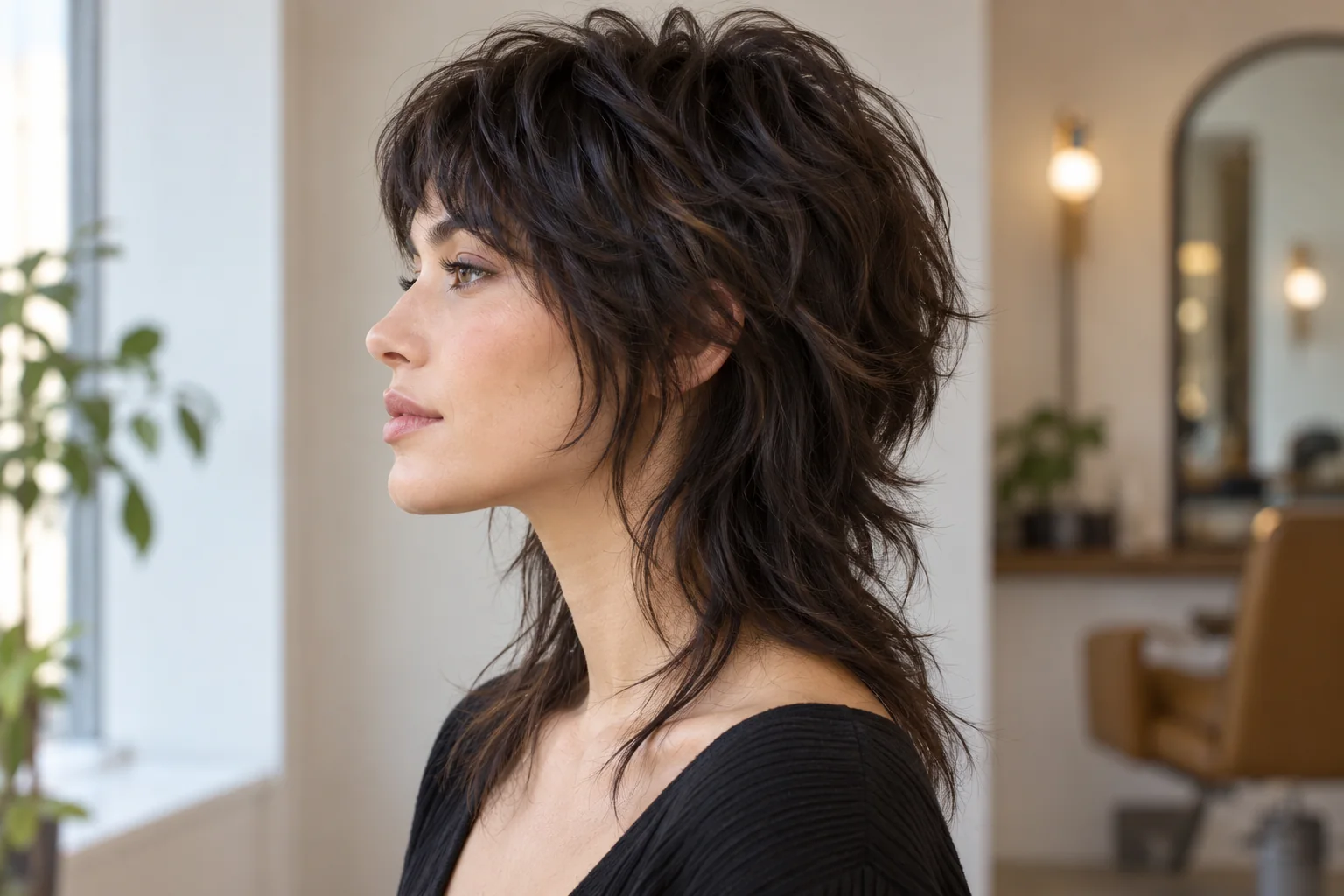
A shag usually spreads layered movement around the head; a wolf cut often emphasizes a shorter crown and a longer, more mullet-like back. The names overlap in salons. The reliable comparison is the balance between top volume, side fullness and the length left at the nape.
Make it work for you
Choose your starting point
Select the situation closest to yours for a practical next step.
I want movement with a fuller outline: Start the consultation with a soft shag reference. Ask for blended crown layers and enough weight at the lower perimeter.
I want a short-top, long-back contrast: Bring a wolf-cut side view. Identify how short the crown can go and how separated the nape should look.
I need every section to tie back: Show the intended tie position before cutting. Request longer crown and side layers; the reference may need substantial adaptation.
Your preparation card
Check before you start
Tick each item as you work through it. Your selections stay on this page and reset when it is reloaded.
0 of 5 complete
Look at three areas in every reference
| Area | Shag tendency | Wolf-cut tendency |
|---|---|---|
| Crown | Layered lift blended through the rest | More pronounced short top |
| Sides | Movement around the face and ears | Can be lighter or more disconnected |
| Back | Layered perimeter with variable fullness | Longer nape emphasized below crown |
| Overall effect | Rounded, distributed texture | Stronger top-to-back contrast |
These are useful tendencies, not strict rules. A soft wolf cut may resemble a shag; a heavily textured shag may resemble a wolf cut. Ask your stylist to point out where their interpretation differs from your photo.
Compare photographs with similar starting conditions
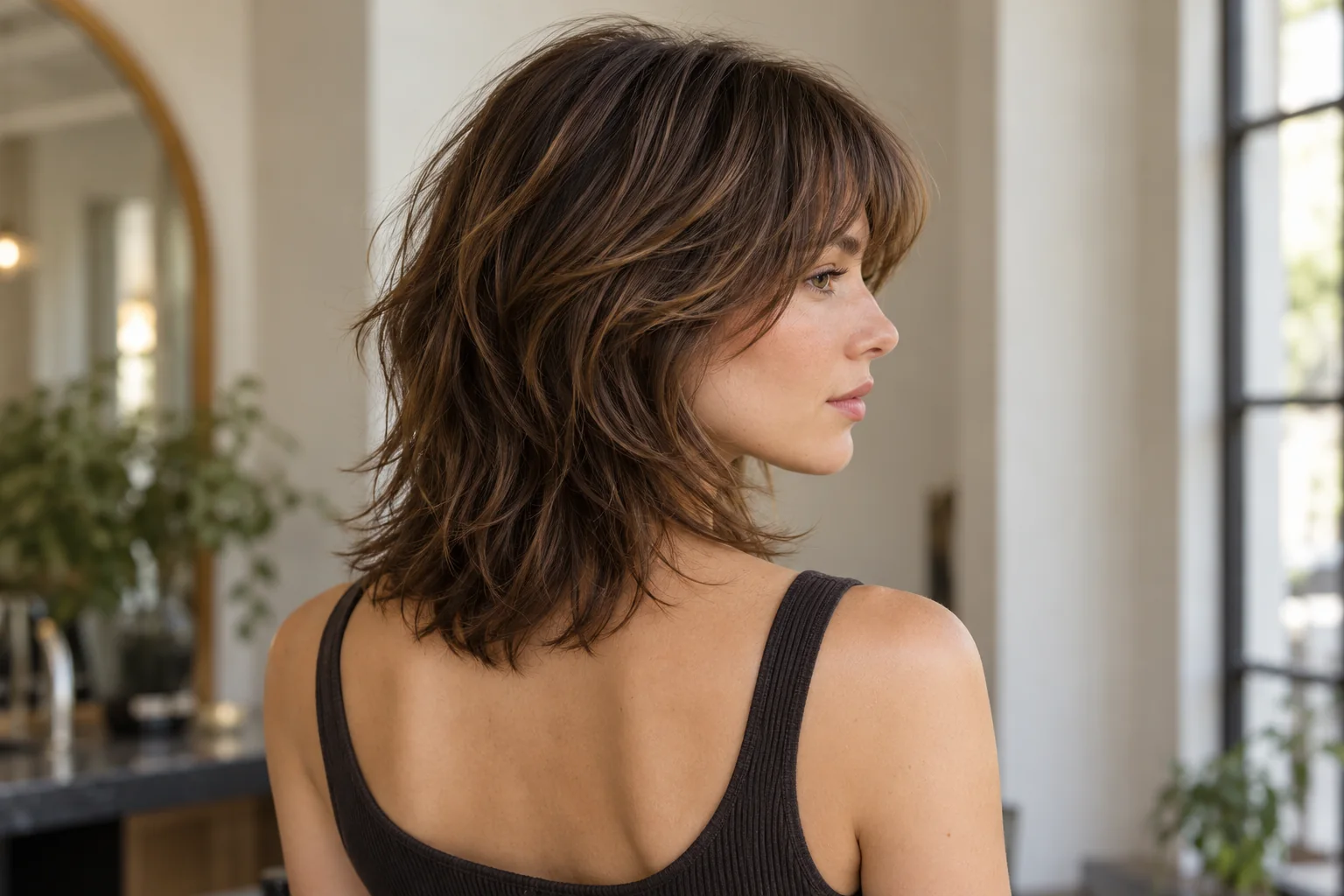
A curly shoulder-length shag and a straight waist-length wolf cut do not isolate the haircut difference. Look for comparable length, texture and view. Front photographs show fringe and face framing; side photographs reveal crown-to-nape contrast; the back reveals how much weight remains at the ends.
Notice whether the hair has been curled, teased or blown out. Styling can turn a soft layered cut into a much bigger silhouette. Ask to see a less styled version if you normally air-dry. Use our 90s haircut overview for wider context without treating every layered shape as interchangeable.
Choose what must stay long
If tying back matters, identify which sections need to reach the tie. Keeping the back long does not guarantee the crown and sides will fit into a ponytail. Ask the stylist to show the shortest proposed crown piece and where the shortest side piece will land when dry.
If you prefer a full lower edge, say so before discussing texture. Short layers and heavy removal can leave less hair at the perimeter. On dense hair, weight can be adjusted selectively; on lower-density lengths, preserving the outline may matter more than recreating a dramatic reference.
For curls, agree on the worn curl length and where the layers will sit after shrinkage. Do not use a stretched measurement as the only guide if you usually wear your hair curly.
Understand the styling tradeoff
Neither name guarantees a wash-and-go result. Straight hair may need direction or product to show separated layers. Wavy hair may reveal the shape more easily but still change with humidity and drying method. A short crown can lift naturally or lie flat depending on growth direction.
Ask the stylist to demonstrate one realistic finish using your normal routine. For a dryer finish, use moving airflow and the lowest effective heat. If you dislike daily styling, request a softer transition and enough layer length to settle naturally.
A useful test is to describe the finish without a trend name: “I want movement all around, but I do not want the back to look like a separate tail,” or “I want a strong short-top, long-back contrast.”
Make the consultation concrete
- Choose your maximum acceptable crown shortness.
- Show how much ear coverage you want.
- Identify a minimum nape length and desired lower-edge fullness.
- Explain whether the fringe should part, sweep or sit across the forehead.
- Describe your normal drying method and tie-back needs.
Bring one reference you like and one that goes too far. Explain the difference in crown height or back length. A picture you dislike can make your boundary much clearer than asking for “a subtle version.”
You do not need two different haircuts just because two names appear in your saved references. Ask your stylist to identify the shortest layer and the degree of nape contrast in each picture.
Common questions
Is a wolf cut just a shag?
They overlap, but wolf references often emphasize the shorter crown and longer back more strongly. Agree on the silhouette instead of relying on the name alone.
Which cut suits fine hair?
Discuss retaining perimeter weight and avoiding excessive removal. Fine strand diameter does not tell the stylist your density or growth pattern by itself.
Can either cut work without bangs?
Yes. The front can stay longer. Show the opening and face frame you want rather than assuming a fringe is mandatory.
Related guides
- 90s Haircuts: A Guide to Layers, Bobs, Curtains and Shags
- Grunge Hairstyles for Men: 10 Cuts and Styling Ideas
- Long Haircuts for Women: Layers, Shape and Maintenance
Sources and further learning
External references explain the underlying techniques or haircut terminology. The chooser is a starting point for practice or a salon conversation. Images are AI-generated references, not a documented step-by-step salon demonstration.




Leave a comment