



A flipped-ends hairstyle turns the last part of the hair outward while leaving more of the length relatively calm. The key is where the bend starts. A small turn near the tip creates a different shape from a curl beginning halfway up the section.
You can try the finish on an existing bob, lob or longer cut. It is a styling direction, while the wings haircut concerns the layers and outline that support a winged shape. This tutorial keeps those two decisions separate.

Choose a subtle flick or a broad curve
Before styling, point out the part of a reference you want: a narrow outward tip, a larger curved end or front pieces swept away from the face. Check the back of the reference too. A photo showing only two front flicks does not necessarily show a full head of identical ends.
For a first attempt, isolate one easy-to-reach side section. Use it to check the direction and depth of the bend before repeating around the head.
Choose one tool route
Round brush and dryer
This route lets you build the finish during drying. Prepare and section the hair as you normally would, using a heat protectant according to the label. Guide the length over a manageable brush, then turn the ends outward as they dry. Keep the nozzle moving and clear of your skin. Let the shape cool before pulling through it.
A larger brush generally gives a broader curve when the section can wrap around it; a smaller one offers a different bend. Test the actual brush and length together rather than expecting a size name to guarantee the finish.
Flat iron on dry hair
L’Oréal Paris’s flipped-ends example uses an iron to turn the ends outward and upward after the hair has dried. Prepare your hair and tool according to their instructions. Work with a small section, guide along the length and make a gentle outward curve near the ends rather than clamping a sharp fold in one spot.
The American Academy of Dermatology advises using flat irons on dry hair at a low or medium setting. A hot iron is not the tool for finishing hair that is still damp inside. Avoid repeated passes in an attempt to make one section match a photo exactly.
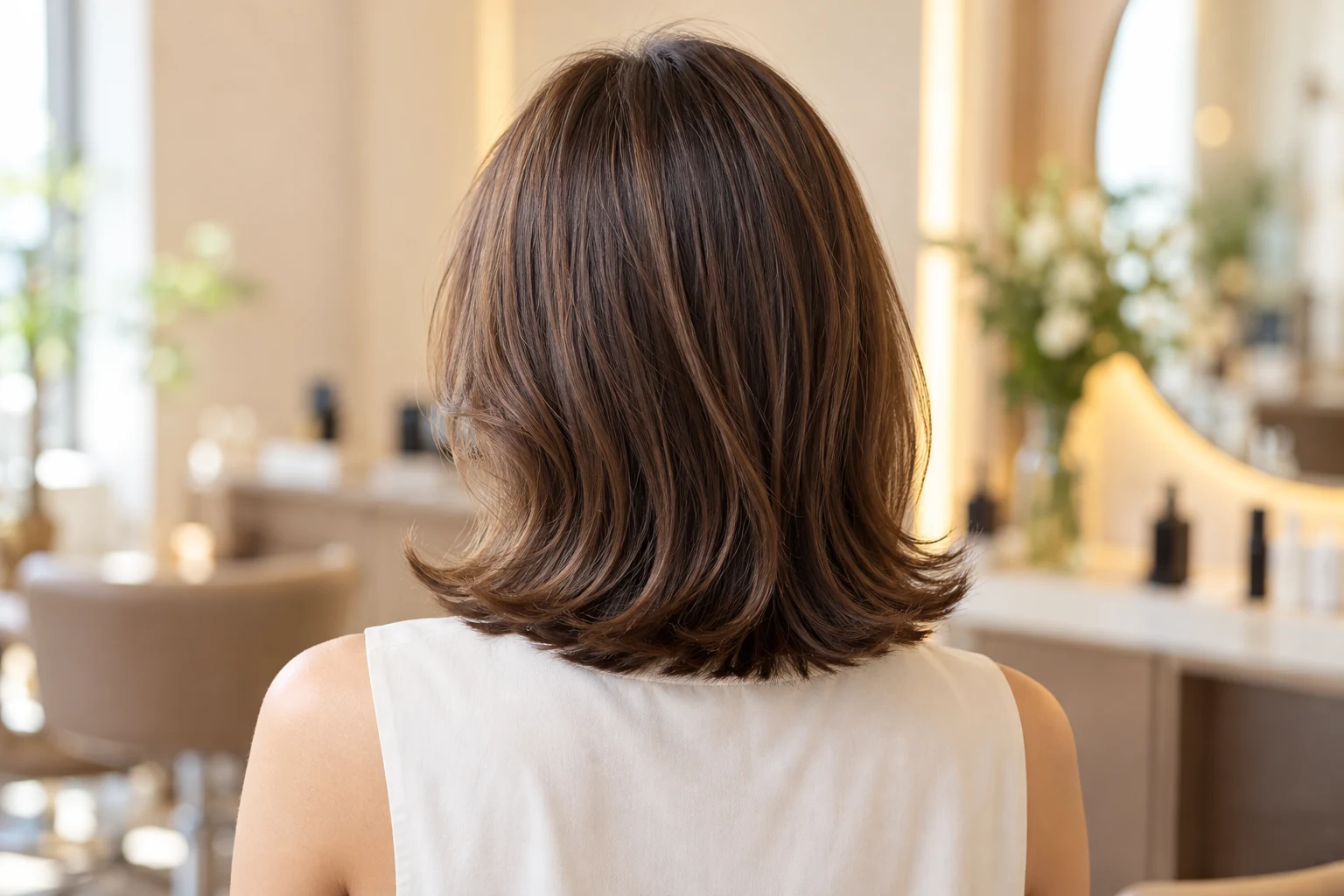
A direction check before heating
- Hold the tool switched off and take one side section.
- Trace the intended movement away from the neck or face.
- Change hands or position for the opposite side.
- Check the direction relative to your head, rather than simply repeating the same wrist rotation in the mirror.
- Keep your intended starting point for the bend consistent on both sides.
This short rehearsal helps distinguish an outward flick from an inward tuck. If the movement is awkward, use a different grip or get a stylist to demonstrate it instead of improvising with a hot tool close to skin.
What the haircut changes
A one-length edge can read as a clear band of flipped ends. Several layers produce several separate ends at different heights. Neither is wrong, but they are different targets. Our 90s haircut guide helps identify which outline appears in your reference.
If the hair rests against the shoulders, compare how it falls with and without a collar. Movement from clothing can affect the end direction. Do not cut more length just because one styling attempt flicked unevenly.
Troubleshooting
- A hard crease instead of a curve.
- Rehearse a continuous movement with the tool off. Avoid holding one tight bend in place.
- One side flips in.
- Check your mirrored hand movement and the direction of the end turn.
- Too much curl.
- Begin the turn closer to the tips, or try a broader brush-supported bend on another occasion.
- Fine ends look separated.
- Compare the product amount and how much you handled the finish before adding more hold.
Common questions
Must I straighten all my hair first?
No. Decide whether you want to keep your natural movement through the lengths. A small end accent need not become a full straightening routine.
Can I do it on short layers?
Only where there is enough length to control safely with the tool. Leave pieces that are too short rather than bringing heat closer to the scalp.
How do I maintain it the next day?
Arrange the ends first and assess what needs attention. Avoid automatically reheating the whole head.




Leave a comment