



Bottleneck bangs usually have a shorter, narrower center that opens into longer curved sides. Curtain bangs usually leave a more obvious central opening, with the fringe sweeping to each side. The labels overlap, so compare the shortest dry length and how much forehead you want covered.
Make it work for you
Choose your starting point
Select the situation closest to yours for a practical next step.
I want light coverage across the center: Compare a bottleneck reference with a narrow wispy center. Agree on the shortest dry landmark and your growth pattern.
I want an open central part: Compare curtain references. Specify the opening width and the shortest side piece rather than just saying long bangs.
I want everything to clip back: Check the center length first. A long side frame does not guarantee the shortest fringe will reach your clip.
Your preparation card
Check before you start
Tick each item as you work through it. Your selections stay on this page and reset when it is reloaded.
0 of 5 complete
Compare the center first
| Question | Bottleneck tendency | Curtain tendency |
|---|---|---|
| What sits in the center? | Shorter light fringe near the brow | A more open part |
| How do sides behave? | Widen from a narrow center into curved cheek pieces | Sweep away from the opening |
| What needs agreement? | Center coverage and shortest length | Opening width and shortest side landmark |
| Shared issue | Growth direction, dry texture and daily styling | |
A curtain fringe can be short, and a bottleneck fringe can be quite open. One front photograph may not show a meaningful difference unless the center is arranged the way you intend to wear it.

Choose forehead coverage and dry length
Point to the shortest acceptable landmark on your own face. A brow-level center in a reference may sit differently on you because of curl, growth direction or the way the model was styled. Ask to see the proposed length before cutting.
Decide whether you want hair across the center when you are working, wearing glasses or exercising. If clipping back matters, check the shortest pieces as well as the long sides. A fringe that looks long at the cheek may still have a center too short to reach a clip.
Our curtain bangs consultation guide covers the open fringe in more detail. Use this page to compare the center shape rather than creating two contradictory salon requests.
Check growth direction before choosing a dense center
Show your stylist how the front falls naturally before it is brushed into a symmetrical shape. A cowlick can lift or divide a short center. Longer pieces may be easier to redirect, but no haircut label guarantees that a growth pattern will disappear.
For curls, choose the shortest length in your usual curl pattern. If you wear both curly and stretched finishes, explain which one takes priority. The shorter center of a bottleneck shape may change more visibly between those finishes.
If the front section has low density, discuss how much hair will be brought forward and what remains at the sides. Wispy separation is a styling choice, not a treatment for thinning hair.

Compare daily styling effort
A bottleneck center may need more deliberate arrangement if it separates in a direction you dislike. Curtain pieces may need a guided bend to stay away from the face. Both can move with humidity, hats and your natural part.
Ask for a quick demonstration with the tools you actually use. If using a dryer, keep it moving and use a low effective setting; do not hold hot airflow against the forehead. Let the fringe cool before repeatedly brushing it back into place.
If you prefer air-drying, choose a reference that shows a realistic natural finish. A polished rounded fringe in a studio image may depend on styling rather than cutting alone.
Take one clear brief to the salon
For bottleneck bangs: “I want a light short center near this dry landmark, widening into these longer cheek pieces. Keep the sides connected and show me how the center falls without styling.”
For curtain bangs: “I want an open part here, with the shortest pieces landing at this point and the sides long enough to clip back.”
Include what you dislike: a dense solid line, too much forehead showing, pieces in the eyes, or a strongly curled-under finish. Ask how the shape grows out and which part would need reshaping first. There is no universal appointment interval; decide around your comfort and desired outline.
Common questions
Are bottleneck bangs just curtain bangs?
They belong to an overlapping family of parted fringes. Bottleneck references tend to retain a shorter narrow center; the actual length and opening matter more than the label.
Which one needs less styling?
It depends on your growth direction and chosen length. Ask the stylist to show what each option does in your normal finish.
Can I change bottleneck bangs into curtain bangs?
Often the center needs to grow before it opens and sweeps as intended. Ask how to reshape the sides while preserving that growth.
Related guides
- Curtain Bangs: Length, Parting and What to Ask Your Stylist
- How to Do a 90s Blowout at Home
- Long Haircuts for Women: Layers, Shape and Maintenance
Sources and further learning
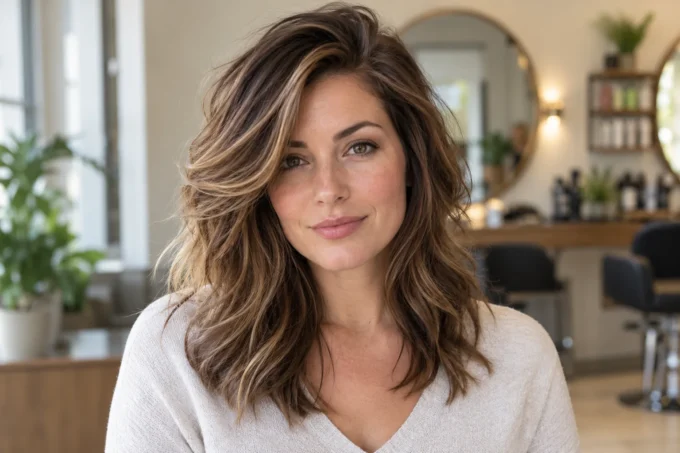
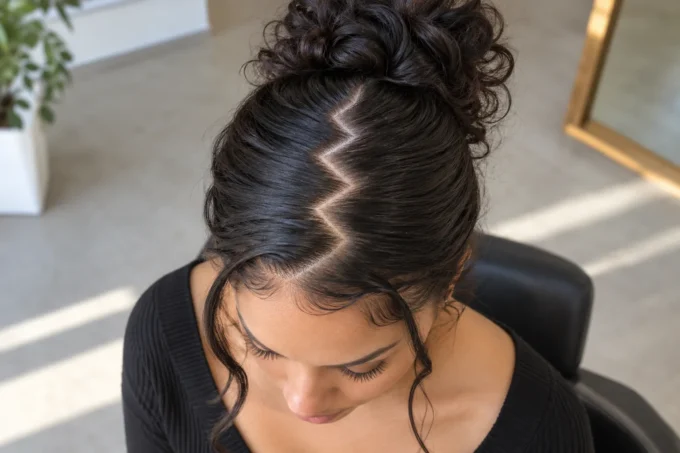
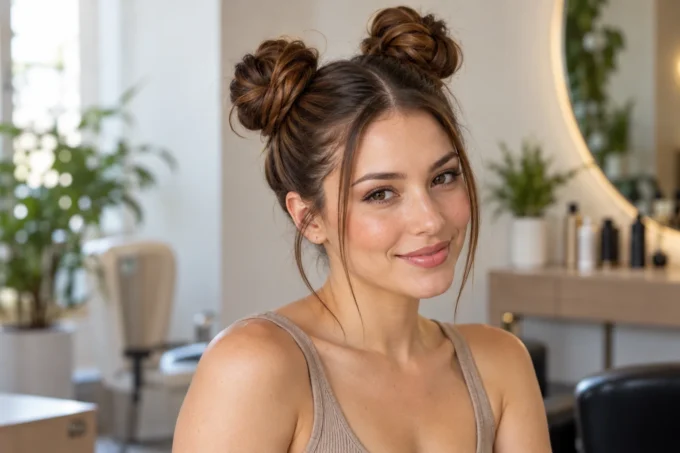
External references explain the underlying techniques or haircut terminology. The chooser is a starting point for practice or a salon conversation. Images are AI-generated references, not a documented step-by-step salon demonstration.







Leave a comment