


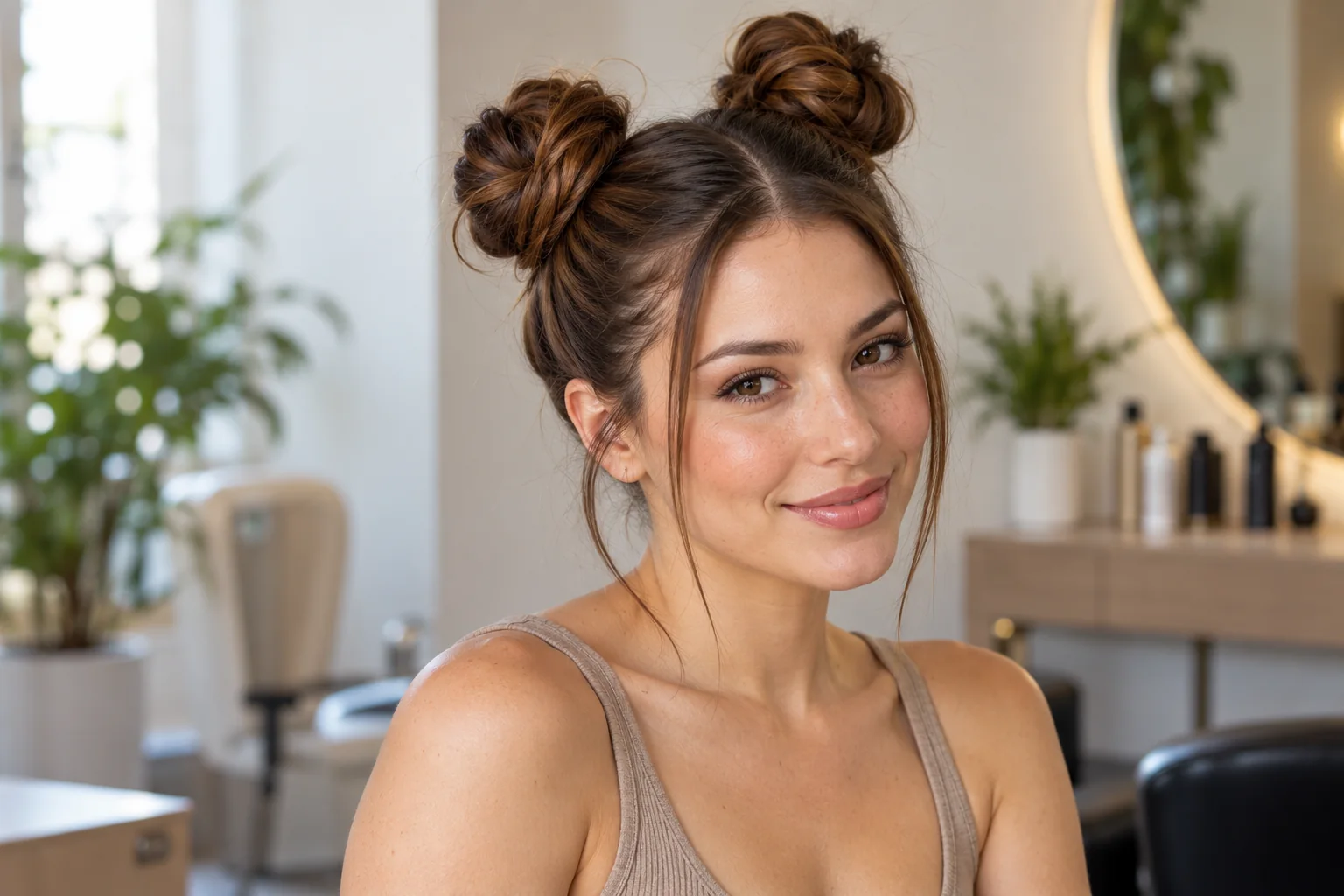
Space buns are two buns placed on opposite sides of a part. The reliable starting point is two balanced ponytail bases, followed by controlled coils and comfortable support. Choose full-up or half-up before sectioning so you do not keep pulling short nape pieces toward a base they cannot reach.
Make it work for you
Choose your starting point
Select the situation closest to yours for a practical next step.
My nape layers will not reach: Choose half-up buns or lower the bases. Include only the hair that reaches without pulling.
One bun is higher than the other: Compare the ponytail bases before coiling. Reset the base position instead of tightening the finished bun upward.
I want a soft textured finish: Secure the bases and coils first, then loosen small outer areas. Stop if the shorter pieces begin to slip out.
Your preparation card
Check before you start
Tick each item as you work through it. Your selections stay on this page and reset when it is reloaded.
0 of 5 complete
Choose the version and position
Full-up space buns gather all the hair into two bases. Half-up space buns use the upper sections and leave the lower hair loose. The half-up version can be more practical when short nape layers cannot reach a high base.
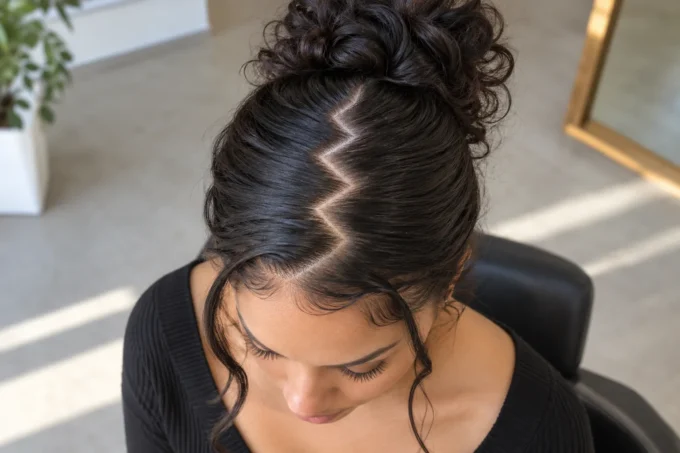
Choose high, middle or lower placement before tying. Use visible landmarks in the mirror, such as the top of each ear, to compare the bases. A slightly off-center part is fine if that suits your normal style; aim for intentional balance rather than assuming every head needs perfect symmetry.
Our messy bun tutorial explains a single looser bun. Here the main challenge is matching two foundations and distributing support.
Make two supported buns
- Detangle: use a method suited to your texture, then separate the hair into left and right sections.
- Park one side: clip it away so pieces do not cross the part while you work.
- Set the bases: make two comfortable ponytails at your chosen height. Check their position from the front and back.
- Form the first coil: twist the tail gently and wrap it around its own base. Keep the coil close enough to support, without dragging the scalp.
- Secure the end: tuck the tail beneath the coil and pin it through the bun into supporting hair.
- Repeat: use a similar coil direction or an intentional mirrored direction on the second side.
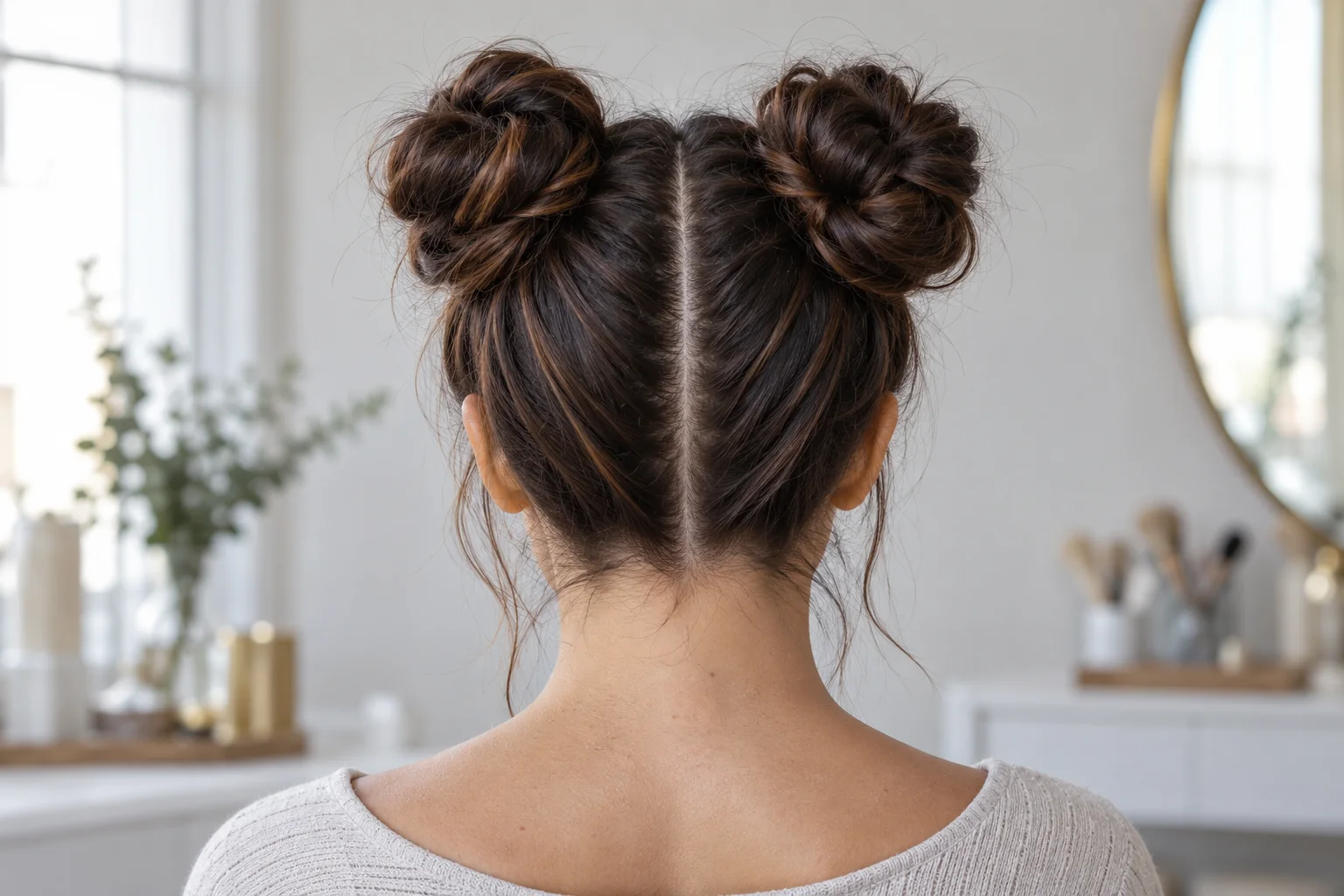
- Check balance: compare height, width and distance from the part before loosening the surface.
If the first bun is much tighter, reset its coil instead of pulling the other base upward to match it.
Balance by shape, not by tension
One side may have more density or shorter layers. Compare the size of the coiled tails and how much length remains outside each bun. You can adjust the coil’s width without tightening the ponytail base.
For a softer finish, loosen small areas after the support is secure. On layered hair, excessive widening may release the ends. Small escaping pieces can be part of the look; do not use discomfort to make the outline perfectly smooth.
A rear mirror is useful because the front view can hide a base that sits farther back. Check the part and nape before adding clips or bows.
Adapt to texture and length
On short hair, try half-up buns using only the sections that reach. A looped ponytail can give a small bun shape if the tail is not long enough to coil. Keep the method honest: a tiny loop and a fully coiled bun have different support needs.
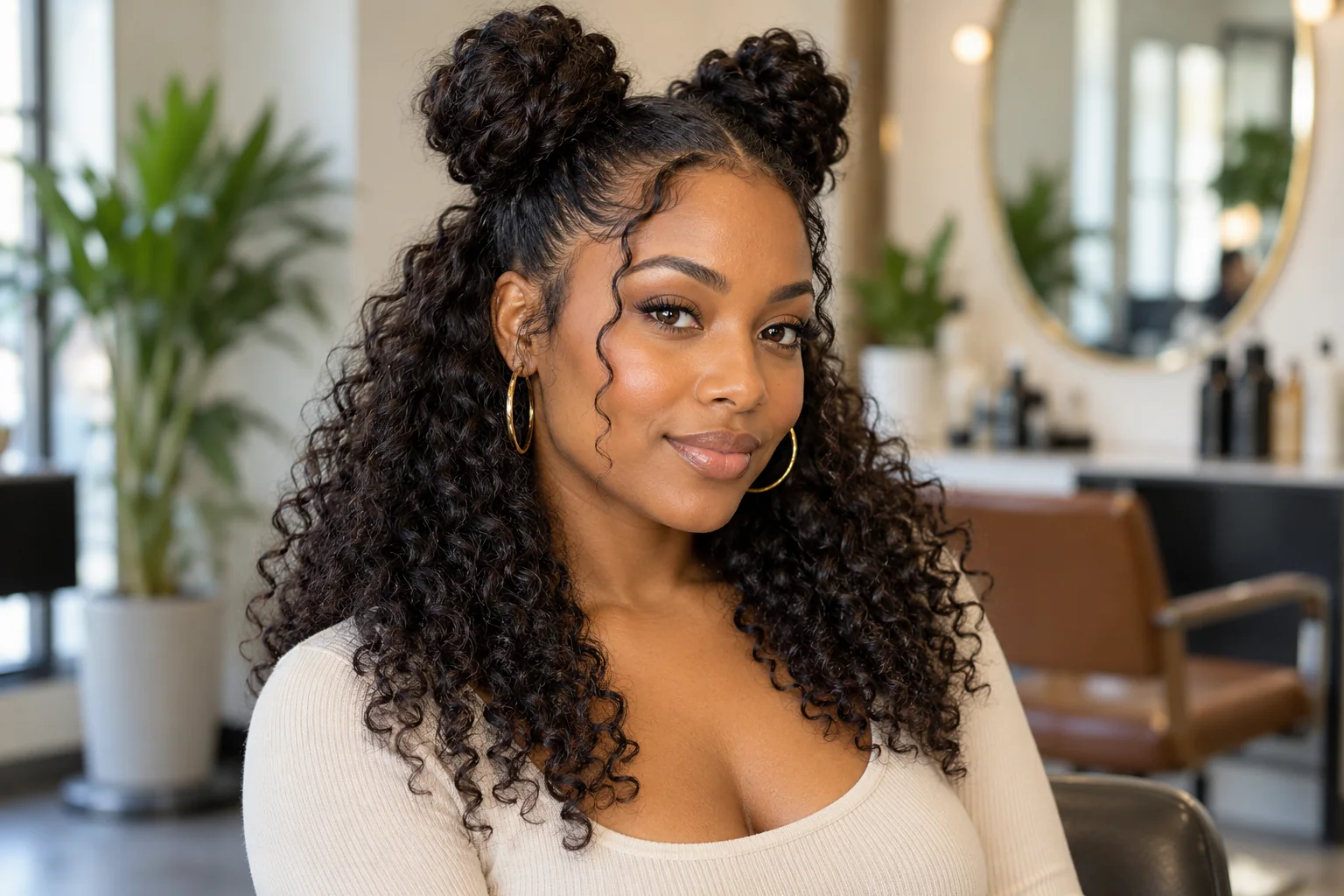
On dense hair, a lower base may be easier to support than a very high one. On curls and coils, preserve your preferred texture and avoid unnecessary brushing to force a sleek result. Two puffs are another hairstyle; if you want coiled buns, choose sections with enough length to wrap comfortably.
Use appropriate ties and pins for your hair. Remove or reposition anything that scratches or presses. If the temples pull, release and rebuild the bases more loosely.
Solve the finishing problems
- One bun is larger.
- Check section size, tail length and how tightly each coil was wrapped. Widen the smaller coil slightly or reset the larger one.
- The ends stick out.
- Tuck the tail under the supported coil and pin it, or choose a deliberately textured finish.
- The bun rotates.
- Support the coil at more than one point rather than relying on the end pin alone.
- The nape will not stay up.
- Lower the bases or choose half-up buns. A short piece cannot be made longer by tightening.
Take the buns down by removing every pin, uncoiling the tails, then releasing the base ties. Separate the lengths gently before detangling.
Common questions
Can I do space buns with short hair?
A half-up version or two small looped ponytails may be more practical than fully coiled buns. Check which sections reach first.
Do the buns have to sit high?
No. Lower placement changes the look and can make short layers easier to include.
How do I make them the same size?
Start with balanced sections and base positions, then compare the coil width. Avoid pulling one side tighter simply to match the other.
Related guides
- 90s Messy Bun: Step-by-Step Styling and Troubleshooting
- Claw Clip Hairstyles: Twist, Fold and Secure Your Hair
- 90s Butterfly Clip Hairstyles: 8 Looks and Placement Tips
Sources and further learning
External references explain the underlying techniques or haircut terminology. The chooser is a starting point for practice or a salon conversation. Images are AI-generated references, not a documented step-by-step salon demonstration.










Leave a comment