


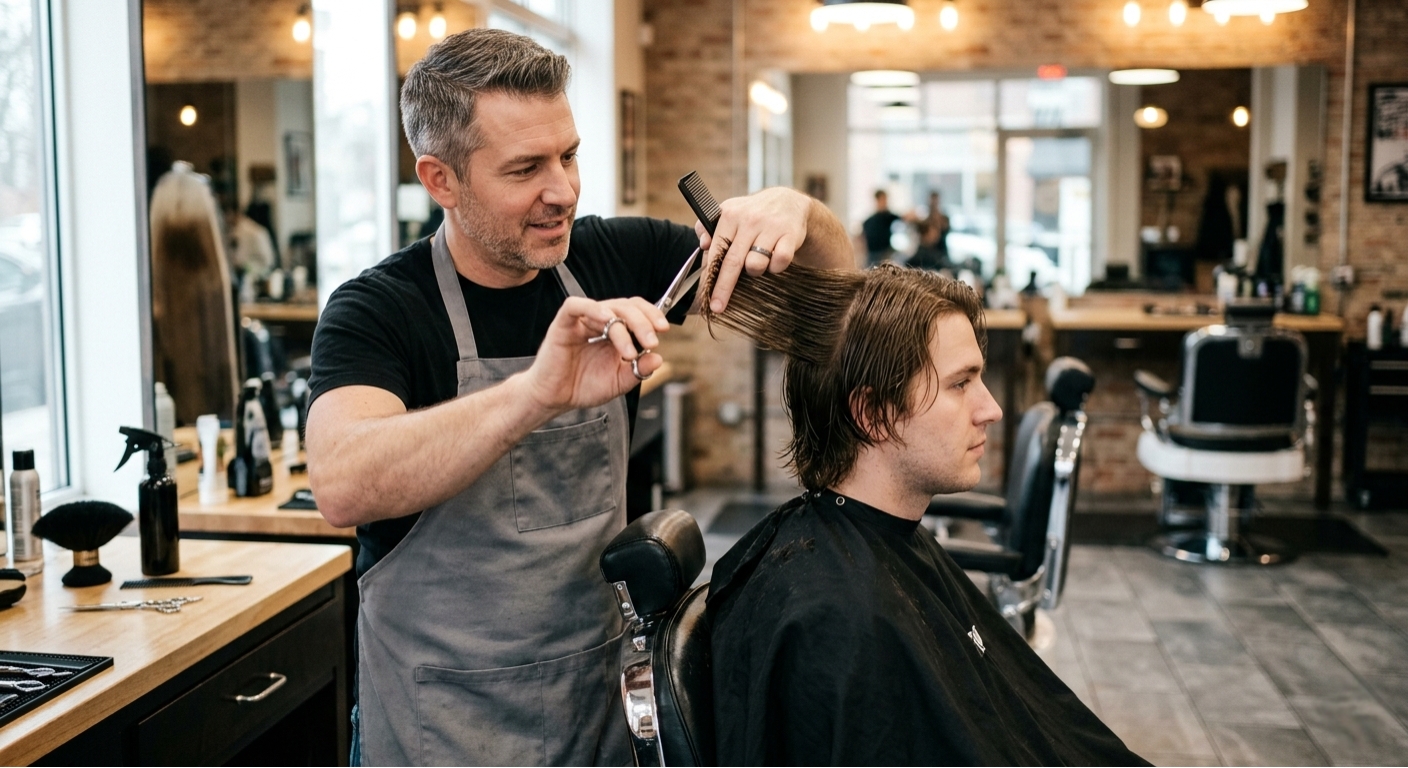
A bad haircut grows out. Hand pain and sloppy results do not.
That is why choosing the right hair cutting scissors matters more than most people realize. The right pair can improve comfort, boost control, and help you cut cleaner lines with less effort. In this guide, Hairstyle Verse breaks down what really matters when buying hair cutting scissors, from size and steel to ergonomics, blade shape, and maintenance. You will also see quick comparison tables, pro tips, and practical advice for both salon professionals and home users. Get all the information you need on Hair Accessories. Check out our articles!
Table of Contents
Why Hair Cutting Scissors Matter More Than Most People Think
A lot of people still treat hair cutting scissors like regular scissors. That is usually where the trouble starts. Hair is delicate. Technique is precise. Your hands do the same small motions over and over again. If your tool feels heavy, stiff, or awkward, you will notice it fast. Studies on hairdressers have reported 12 month work related musculoskeletal disorder rates ranging from about 62.76 percent to 75.6 percent, with neck, shoulder, back, and hand pain showing up often. That makes comfort and fit more than a luxury. They are part of doing quality work and protecting your career.
At Hairstyle Verse, we look at hair cutting scissors as performance tools. A well-chosen haircutting shear gives you cleaner sections, better tension control, and more confidence, whether you are trimming bangs at home or doing full salon services. Professional hair scissors, barber shears, cosmetology shears, and salon shears all serve the same big purpose. They help you cut precisely without fighting the tool.
How to Choose Hair Cutting Scissors for Your Skill Level
The best hair cutting scissors for you depend on what you actually do with them. That sounds obvious, but plenty of buyers skip this step and go straight to price or looks.
Ask yourself these questions first:
• Do you cut hair every day or once a month
• Do you mostly trim fringes and ends or do full haircuts
• Do you work with dry cutting, blunt cutting, or scissors over a comb
• Do you need barber scissors for fades and a clipper over comb support
• Are you right handed or do you need true left handed hairdressing scissors
• Do you want one versatile pair or a small set of specialist shears
That simple check makes shopping much easier.
Best Hair Cutting Scissors for Home Use
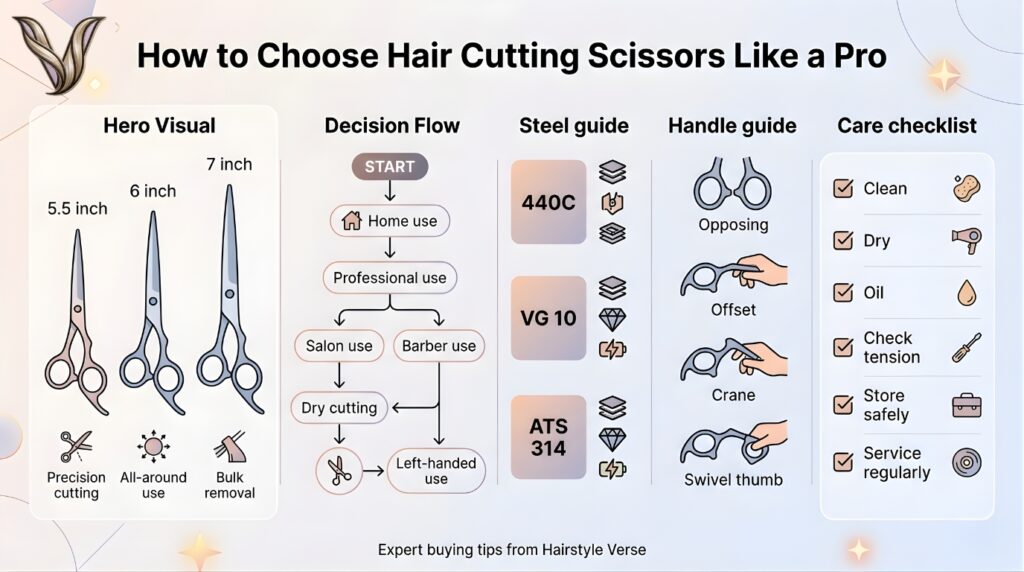
If you want the best hair cutting scissors for home use, keep it simple. Most home users do best with a 5.5 inch or 6 inch pair that feels light, balanced, and easy to control. Shorter blades help with detail work around the face, while a medium size feels more forgiving for basic trims. A lot of people buy oversized barber shears and regret it after the first awkward bang trim. Hairstyle Verse usually recommends a medium size starting point unless you already know your preferred technique.
For home use, prioritize these features:
• Comfortable finger rings
• Smooth tension
• Stainless steel that holds an edge well
• Balanced weight
• A clean closing action without snagging
• Safe control around the face and neckline
If you are comparing good hair scissors to cheap multipurpose scissors, the difference is immediate. Hair trimming scissors made for hair slice more cleanly and reduce folding or bending at the cut point.
Best Hair Cutting Scissors for Salon Pros
If you cut hair all day, your needs change. Professional stylists and barbers often need more than one pair of hair cutting scissors because one size and one blade style cannot do everything well. A stylist may keep a 5.5 inch or 6 inch shear for precision work, plus 6 inch or 7 inch barber shears for scissor over comb, dry cutting shears, or faster perimeter work. Sam Villa notes that longer blades help with bob lines, hairline work, and scissor over comb because they let you cut larger sections with fewer passes and less effort.
That is why many pros build a practical toolkit instead of chasing a single magic pair. The best professional hair scissors match your daily services, your hand size, and your cutting style.
Hair Cutting Scissors Sizes and Blade Length
Size affects control more than most buyers expect. The usual range runs from about 5 inches to 7 inches, and each size has a job.
Hair Cutting Scissors Size Guide
| Size | Best Use | Who It Suits |
| 5 inch to 5.5 inch | Detail work, fringe, close cutting, precision | Home users, stylists who prefer tight control, smaller hands |
| 6 inch | General salon cutting, all around versatility | Most stylists, many home users, everyday cutting |
| 7 inch | Scissor over comb, bob lines, barber work, larger sections | Barbers, advanced stylists, dry cutting specialists |
Sam Villa lists 5.5 inch and 6 inch essential shears as common working sizes and specifically recommends 7 inch shears for bob lines and scissor over comb because the longer blade can cut wider sections more cleanly and with less effort.
If you are trying to choose between 5 inch hairdressing scissors, 6 inch hairdressing scissors, and 7 inch hairdressing scissors, think about movement. Shorter blades give you tight control. Longer blades give you reach and speed. Neither one is automatically better. They just serve different jobs.
Hair Cutting Scissors Steel, Edge, and Tension
This is where buyers either make a smart investment or waste money.
A quality pair of hair cutting scissors should have steel that stays sharp, resists corrosion, and feels smooth during repeated use. Sam Villa ranks common shear steels from 420 through 440C, then premium categories such as VG-10 and ATS-314, noting that better steel usually performs better and holds an edge longer. The same guide also explains that 440C sits at the higher end of standard stainless options, while ATS 314 is considered a premium professional shear steel.
Japanese Hair Cutting Scissors and Premium Steel
When people talk about Japanese hair scissors or Japanese hair cutting scissors, they are usually talking about sharper edge quality, finer craftsmanship, and stronger steel options. That is why terms like VG 10, 440C, and ATS 314 come up so often in conversations about best hair shears and best professional hair shears. Sam Villa also highlights handcrafted convex blades, 440C stainless steel, and premium alloy options in its professional shear guides.
Here is the quick version:
• 440C works well for many professional hairdressing scissors and offers a strong balance of durability and value
• VG 10 appears often in higher end Japanese hair shears because it supports a very sharp edge
• ATS 314 is widely associated with premium professional haircutting shears and advanced edge retention
Now let us talk edges.
Convex edge shears usually feel smoother and sharper. They are popular in premium stylist shears and salon shears because they support precise cutting and slide work. Sam Villa states that handcrafted convex blades start sharper and hold their edge longer than typical machine beveled blades.
Bevel edge shears feel a bit sturdier and can work well for basic cutting, training, or heavier use.
Then there is tension. If your shear bends hair or drags, the tension may be off. Good tension helps the blade close cleanly without extra hand effort. That sounds small, but anyone who has fought dull or poorly adjusted stylist scissors knows how tiring it gets.
Steel and Edge Hair Cutting Scissors Ergonomics and Comfort
| Feature | What it Means | Best For |
| 440C steel | Strong stainless option with good edge life | Professional hair cutting shears at a solid value |
| VG 10 steel | Premium sharpness and refined cutting feel | Japanese hair shears and advanced stylists |
| ATS 314 steel | Top tier pro steel with excellent edge retention | High end salon shears and barber shears |
| Convex edge | Very smooth and sharp cutting action | Slide cutting, precision work, dry cutting |
| Bevel edge | More rugged feel and easier control for some users | General cutting and training |
Hair Cutting Scissors Ergonomics and Comfort
This part matters a lot, especially if you cut every day.
Sam Villa explains that offset grip shears reduce thumb travel compared with opposing grip shears, while crane grip shears place the elbow lower and relieve stress on the shoulder and wrist. The brand also says forward set thumb designs support a more natural hand position and reduce repetitive wrist and shoulder strain.
In real life, that means this:
• Opposing handles can feel stiff and tiring
• Offset handles feel more comfortable for many users
• Crane handles often give the best ergonomic support
• Swivel thumb shears help at awkward angles and detailed areas, such as around the ears and fringe
If your wrist twists every time you cut, your professional scissors for hair cutting are probably not helping you.
Left Handed Hair Cutting Scissors and Swivel Options
Most professional hair cutting scissors are not truly ambidextrous. Scissor Warrior notes that true left handed shears flip blade alignment and handle orientation to match left handed motion, while fake reversible designs can lead to fatigue, uneven cuts, and long term wrist or thumb strain.
So if you need left handed hair scissors, left handed barber shears, or left handed hair cutting scissors, buy the real thing. Do not settle for a flipped right handed tool. That advice may save your hand and your patience.
Swivel thumb shears deserve attention too. Sam Villa says swivel shears allow more comfortable cutting at tricky angles and help maintain a natural wrist and elbow position. For stylists who do dry work, detailing, or lots of perimeter cutting, that can be a real game changer.
Hair Cutting Scissors Comparison
This is the simple buying map we would use at Hairstyle Verse.
| User Type | Best Size | Best Handle | Best Steel Target | Best Use |
| Home User | 5.5 inch to 6 inch | Offset | 440C or similar | Basic trims, ends, bangs |
| Salon Stylist | 5.5 inch + 6 inch | Offset or Crane | 440C, VG 10 | Precision and everyday salon cuts |
| Barber | 6 inch to 7 inch | Crane or Swivel | 440C, VG 10, ATS 314 | Scissor over comb, clipper support, bulk removal |
| Dry Cutting Specialist | 6 inch to 7 inch | Crane or Swivel | VG 10 or ATS 314 | Slide work, texture, movement |
| Left Handed User | Match your technique | True left-handed ergonomic design | Any quality pro steel | Comfort, control, correct blade alignment |
If someone asked us for the best scissors for cutting hair at home, we would not point them to oversized barber scissors. If a working barber asked for the best barber shears, we would not push tiny detail shears. Context matters. That is where Hairstyle Verse wants to be useful, not flashy.
How to Care for Hair Cutting Scissors
A premium pair of hair cutting scissors can last for years if you care for them properly. Sam Villa recommends cleaning product buildup, drying blades thoroughly, oiling the pivot, checking tension, storing shears in a dedicated case, and having them professionally serviced every 6 to 12 months, depending on use. The same brand also warns against using haircutting shears on paper, plastic, or fabric.
Use this simple routine:
• Wipe away hair and product after each use
• Dry the blades fully
• Add a few drops of shear oil at the pivot
• Check tension regularly
• Store your shears in a case, not loose on a counter
• Use them only on hair
• Get professional servicing before performance drops badly
That routine helps your professional hair cutting scissors stay smooth, sharp, and comfortable.
Conclusion
The best hair cutting scissors do not just look sharp. They fit your hand, match your technique, and help you work with more comfort and control. That is true whether you want best hair cutting scissors for home use, professional barber scissors, or premium hairdresser shears for full time salon work.
If you remember just one thing, make it this: buy for fit first, then steel, then speciality features. A beautiful pair of shears that hurts your hand will never become your favourite. A well balanced pair that cuts cleanly and feels easy to control probably will.
For more honest tool guides, real salon insights, and practical beauty education, keep exploring Hairstyle Verse and find the pair of shears that truly works for you.
FAQs
Q1. What are the best hair cutting scissors for beginners?
The best hair cutting scissors for beginners usually measure 5.5 inches to 6 inches and offer a comfortable offset handle, smooth tension, and solid stainless steel, such as 440C. That size gives you better control without feeling too tiny or too bulky.
Q2. Are hair cutting scissors and hair shears the same thing?
Yes, most people use hair cutting scissors, hair shears, and hair cutting shears to mean the same tool. In salon language, many professionals prefer the word shears because it sounds more specialized.
Q3. What size hair cutting scissors do barbers use?
Many barbers prefer 6 inch to 7 inch barber scissors or barber shears, especially for scissor over comb and larger sections. Longer blades can speed up the cut and help create cleaner lines.
Q4. Are Japanese hair cutting scissors worth it?
They can be, especially if you cut hair often. Japanese hair cutting scissors often feature premium steels such as VG 10 or ATS 314 and support a sharper, smoother cutting feel. They usually cost more, but many pros like the performance and edge life.
Q5. Can I use regular scissors instead of hair cutting scissors?
You can, but you probably should not. Regular scissors often bend, drag, or damage the hair instead of cutting it cleanly. Proper hair cutting scissors give you better precision, better comfort, and more consistent results.
Stay informed with the latest trends, visit Hairstyle Verse for more!



Leave a comment