


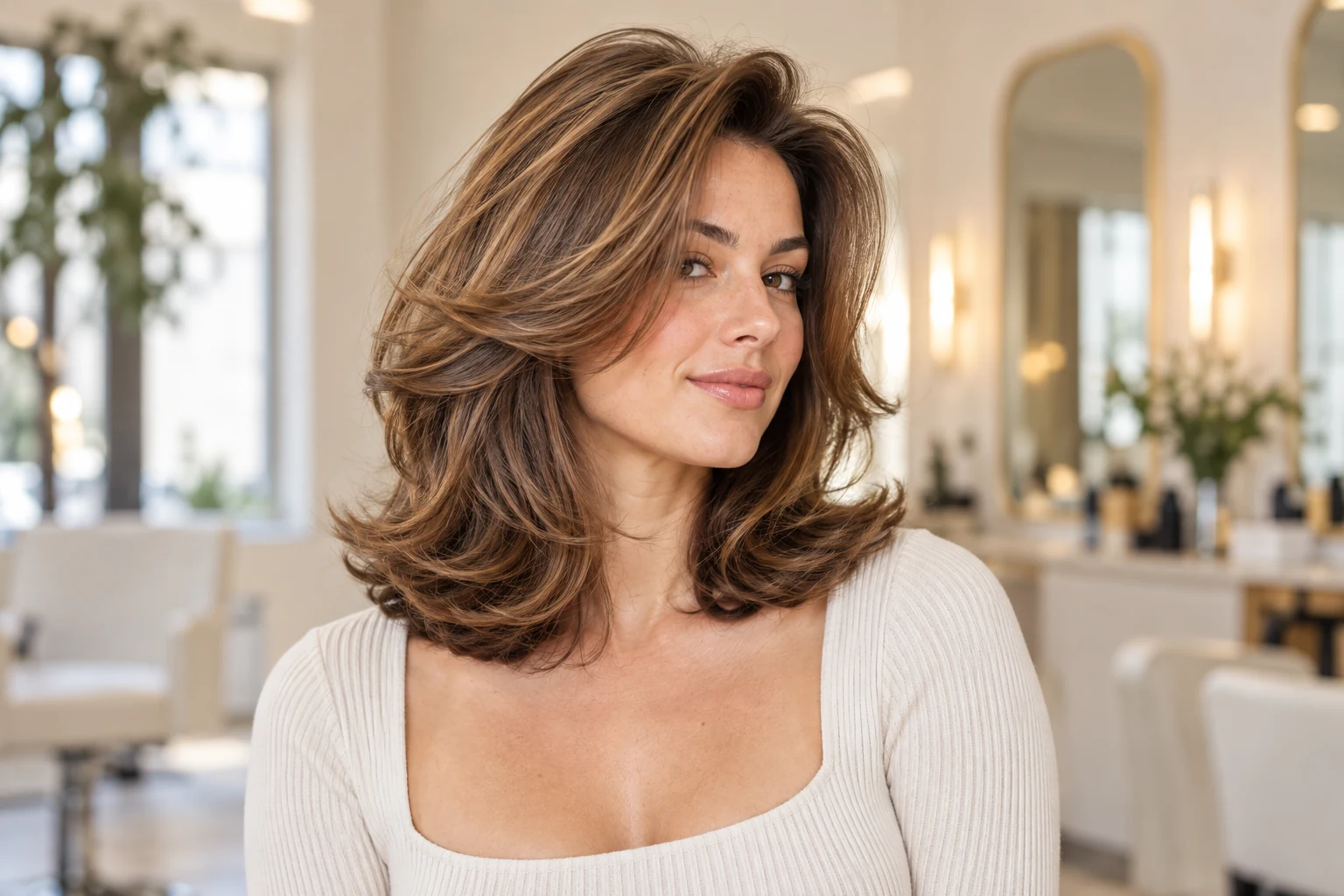
A 90s blowout combines lifted roots, loose movement and a rounded bend through the ends. The most useful starting point is a manageable section and a deliberate cooling step. Trying to curl a large, wet bundle in one pass usually makes the job harder.
This guide focuses on styling an existing cut. If you are choosing layers first, compare our 90s haircut shapes and long haircut guide. A blowout cannot reproduce the exact outline of a differently layered reference photo.
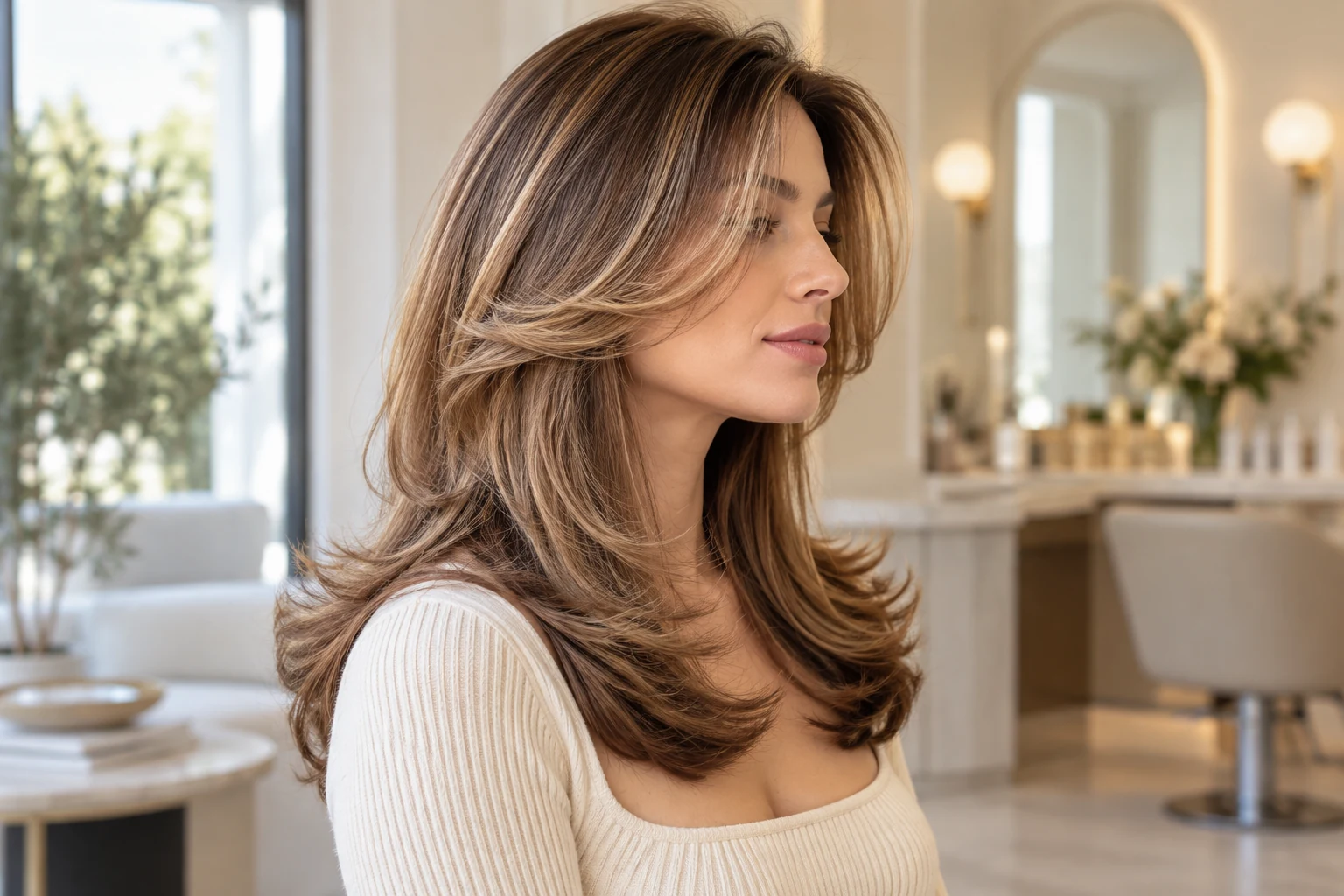
Choose the finish before picking up the dryer
Separate three goals: height at the crown, movement around the face, and the direction of the ends. You might want lift with tucked-under ends, or a quieter crown with outward face-framing pieces. Save a reference for the shape rather than treating its color, density and length as part of the result you must copy.
Sam Villa’s professional education describes the look in terms of root volume, movement and a polished end bend. Its demonstration also shows why the haircut underneath matters. That does not mean you need to cut extra layers before trying a softer version.
Set up a workable station
- A dryer with its compatible nozzle, a round brush you can control, sectioning clips and a mirror.
- A heat protectant used according to its label. Check whether it belongs on damp or dry hair.
- Optional light hold product. Choose by the finish on its label, rather than adding several products at once.
- A clear surface for the dryer and enough space to keep the cord out of your arms.
Use a brush that lets you place a section over the barrel without winding the entire length into a knot. If your hair catches easily in bristles, practice the hand movement on one small section with the dryer switched off.
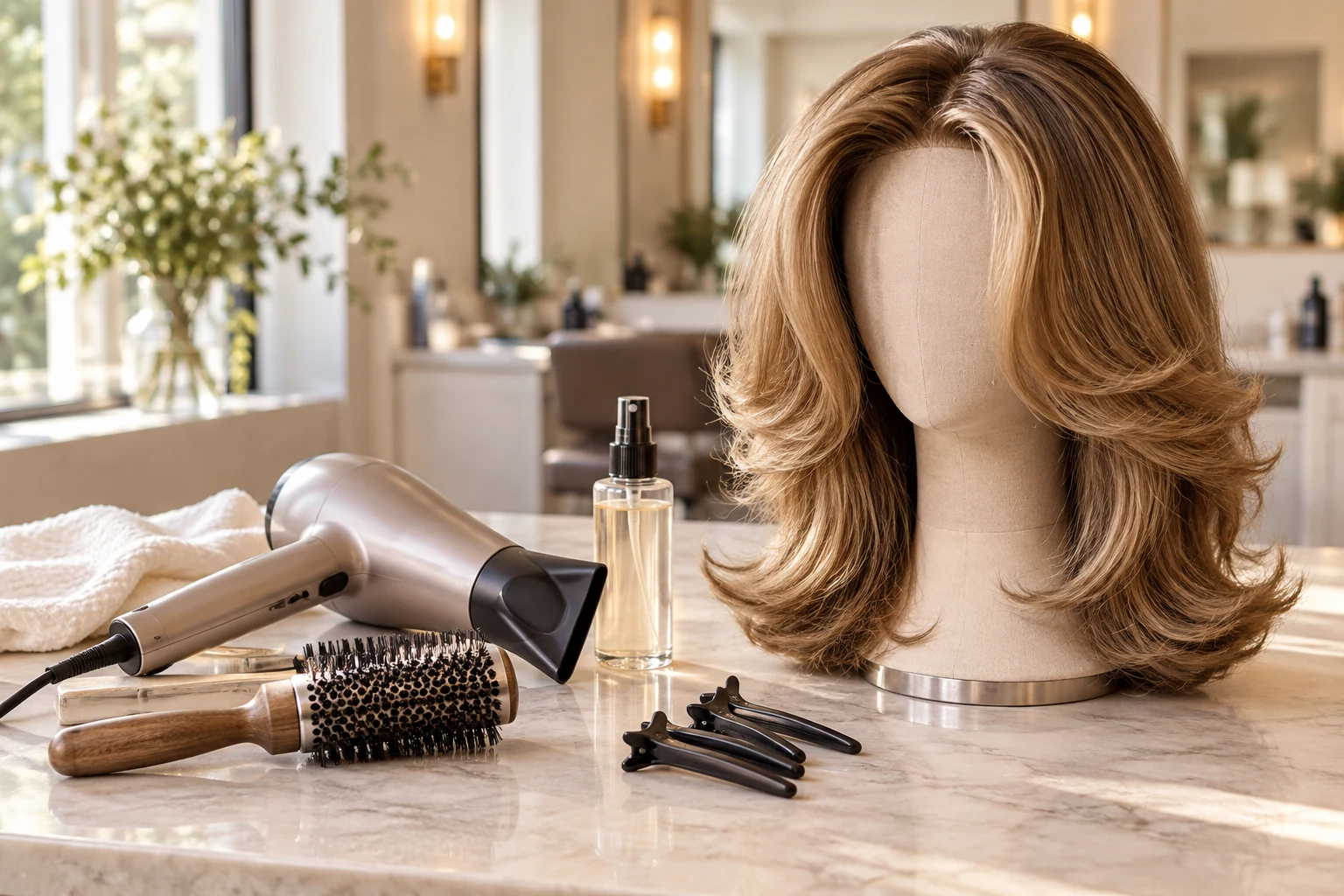
A simple section-by-section method
- Prepare gently. Detangle using a method that suits your texture. Absorb excess water without rough rubbing, apply your chosen products as directed and let some moisture leave before detailed brush work.
- Divide the work. Clip the top away and start with accessible lower sections. Make each subsection narrow enough to sit on the brush without spilling over both ends.
- Dry the roots and length with control. Keep the nozzle moving, following the length toward the ends rather than holding it against the scalp or brush. Use the lowest effective setting.
- Build the bend. As you reach the ends, guide them around part of the barrel in your chosen direction. Release without repeatedly winding the entire section around the brush.
- Support the shape while it cools. Let the section rest before pulling it straight or brushing it out. Sam Villa’s round-brush education emphasizes this cooling period.
- Finish the top. Work the crown and face-framing sections deliberately. Direct the front away from the face if that is the reference you chose, keeping hot airflow away from skin.
- Assess before adding more. Once everything is dry and cool, arrange the shape with your hands. Add hold only if needed and as the product label allows.
Troubleshoot the specific problem
- The ends look right but the crown is flat.
- Review where you placed the brush at the roots. Next time, isolate the crown instead of repeatedly heating the ends.
- The brush catches.
- Stop the dryer. Support the section and unwind carefully; do not tug the brush out. Use a smaller amount of hair and less wrapping on the next section.
- One side bends differently.
- Check the brush direction in the mirror before applying heat. Your hands change position on the opposite side, but your intended end direction should stay consistent.
Adapt the method to your hair
On a shorter bob, aim for a broad curve rather than a full barrel curl. On long, heavy hair, try one crown section before committing to a full set. On curly or coily hair, decide whether you want to keep the natural pattern or temporarily stretch it; this smooth blowout method is not a curl-definition routine. An experienced stylist can demonstrate the approach on your texture.
The American Academy of Dermatology recommends limiting heat styling and using low or medium heat. Heat protectant does not make unlimited heat harmless. Stop if the scalp feels hot or the brush is pulling.
Common questions
Do I need rollers?
No. A round brush and a cooling pause can create a softer version. Rollers are an optional setting tool, rather than a requirement for the haircut.
Why does my blowout not match a photo?
Compare the starting cut, texture and shortest layers before buying another tool. A photo with cheek-length layers will frame the face differently from one-length hair.
Should I redo it every morning?
There is no need to restyle every section automatically. Rearrange with your hands first and reduce repeated heat where you can.




Leave a comment