


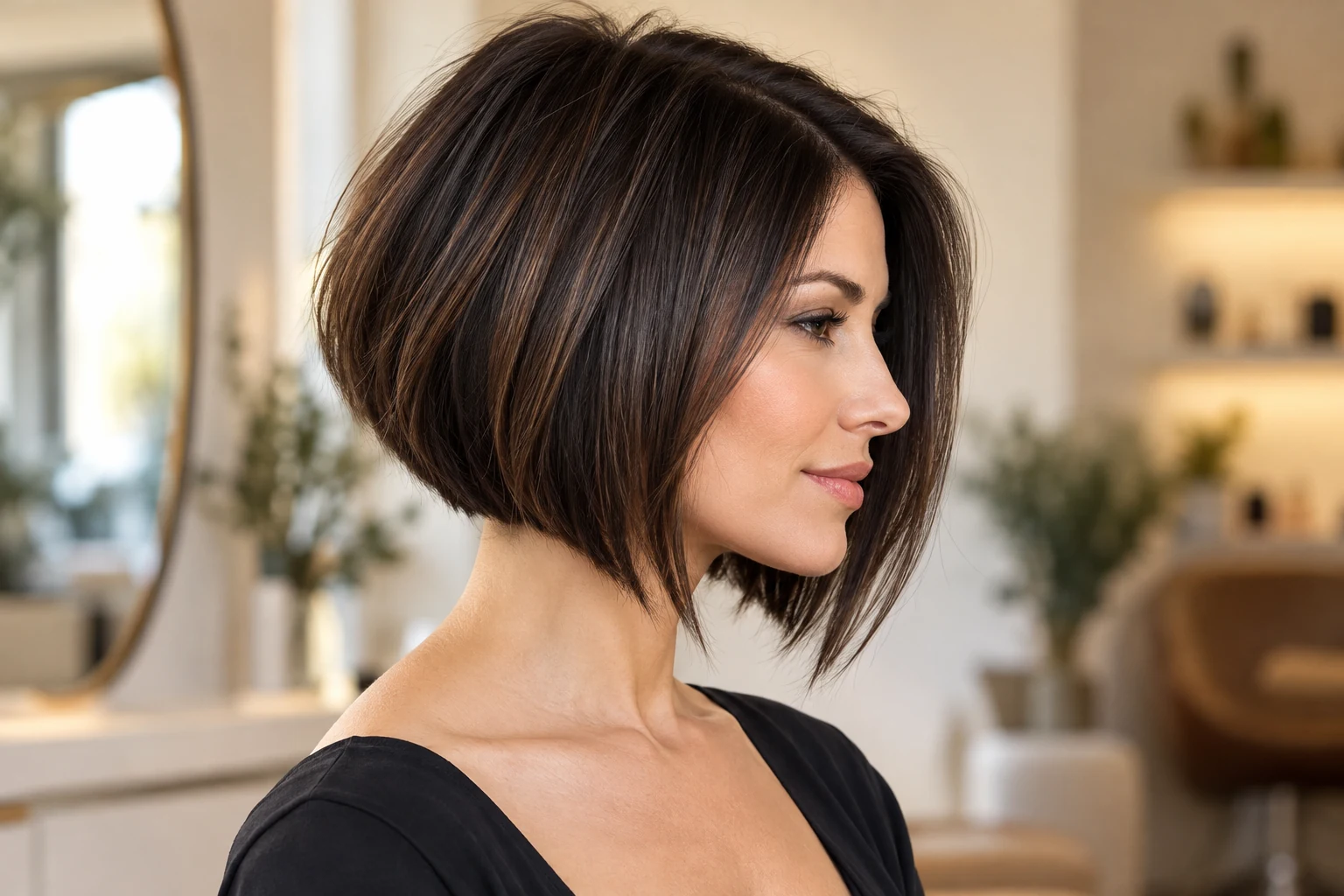
An inverted bob haircut is shorter at the back and longer toward the front. Some versions also use graduation or stacked layers to create a rounded back. Because salons use “inverted,” “A-line” and “stacked” with some overlap, describe the angle and the back shape separately.
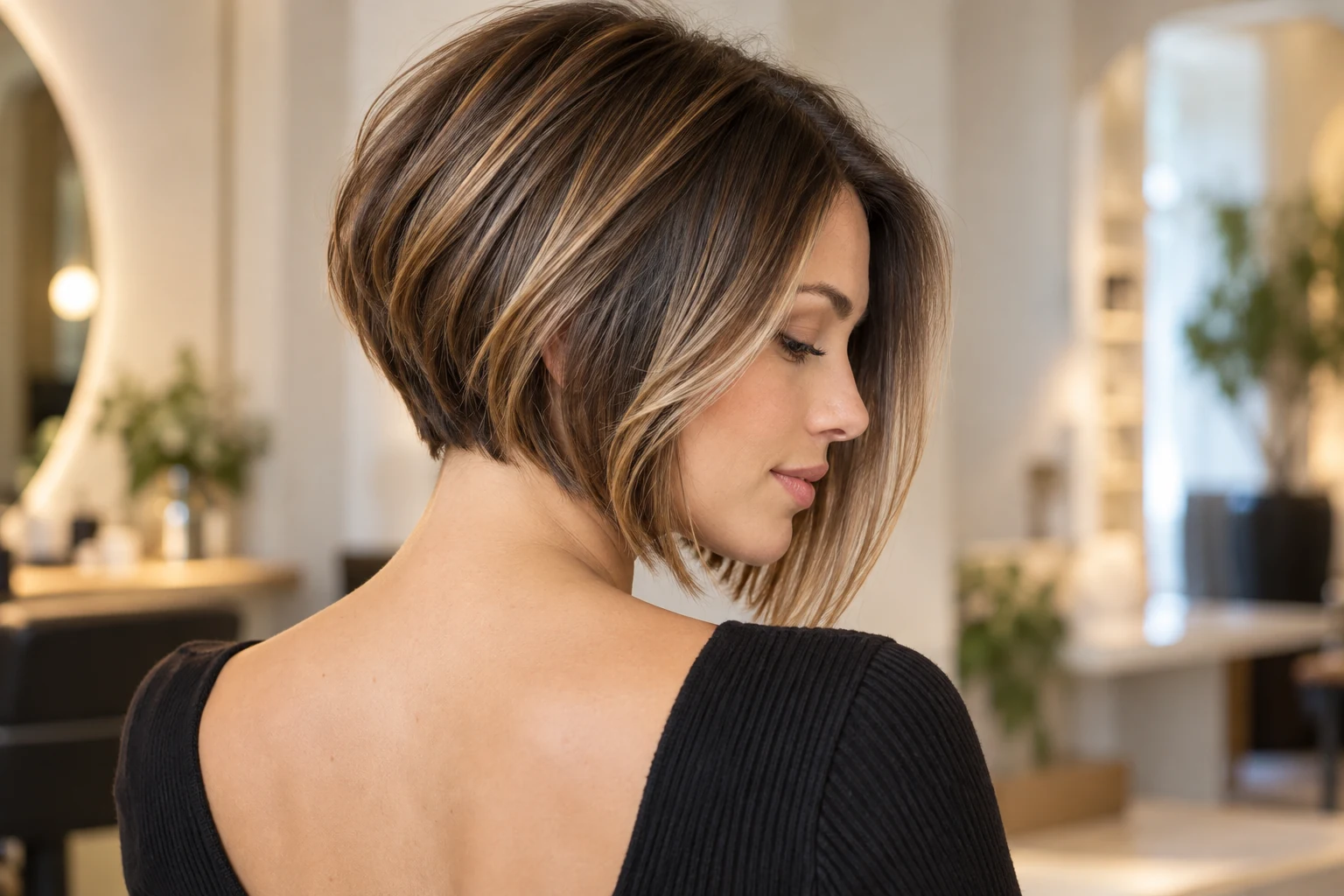
The front photograph alone is not enough. A cut can show long face-framing pieces while hiding a very short nape or a pronounced stack behind them. Ask for a side and back view before choosing the structure.
Separate three decisions
The front length
Point to the dry landmark where the longest front should sit. Then explain whether it must tuck behind the ears or reach a low tie. Keeping front length does not guarantee the shorter back will reach the same style.
The back length
Decide how much neck you want exposed and where the lowest back edge should sit. Mention a neckline, collar or growth pattern that affects how you wear the nape. Ask the stylist to show the proposed back length rather than agreeing only to “short.”
The back fullness
Choose between a quieter back profile and a more rounded, graduated shape. L’Oréal Paris describes stacked bobs with gradual layers and a shorter, rounded back. The amount of visible stacking is a separate choice from the overall front-to-back angle.
Use a side-view brief
| Feature | What to specify |
|---|---|
| Angle | Subtle or pronounced change from back to front |
| Nape | Covered, softly exposed or closely tapered |
| Back profile | Relatively flat or visibly rounded through graduation |
| Front | Dry length and whether it can tuck back |
| Surface | Natural texture, smooth blow-dry or another normal finish |
Ask the stylist to draw the intended outline in the air or show it with a comb. You do not need technical cutting angles to explain the silhouette you want.
How this differs from other bob choices
A blunt-looking edge describes the perimeter’s appearance. Layering describes different lengths within the cut. Inversion describes the shorter-back, longer-front relationship. One cut can combine these ideas, so the names should not be treated as mutually exclusive boxes.
L’Oréal Paris uses A-line for a longer-front, shorter-back shape too. Rather than debating the label, show the exact reference and ask how your stylist will interpret it.
Check the shape in your normal texture
On curls and waves, choose the dry outline first. A smooth side-profile reference can hide how the same lengths will sit in a natural pattern. Ask which areas would need extra styling to reproduce the photographed finish.
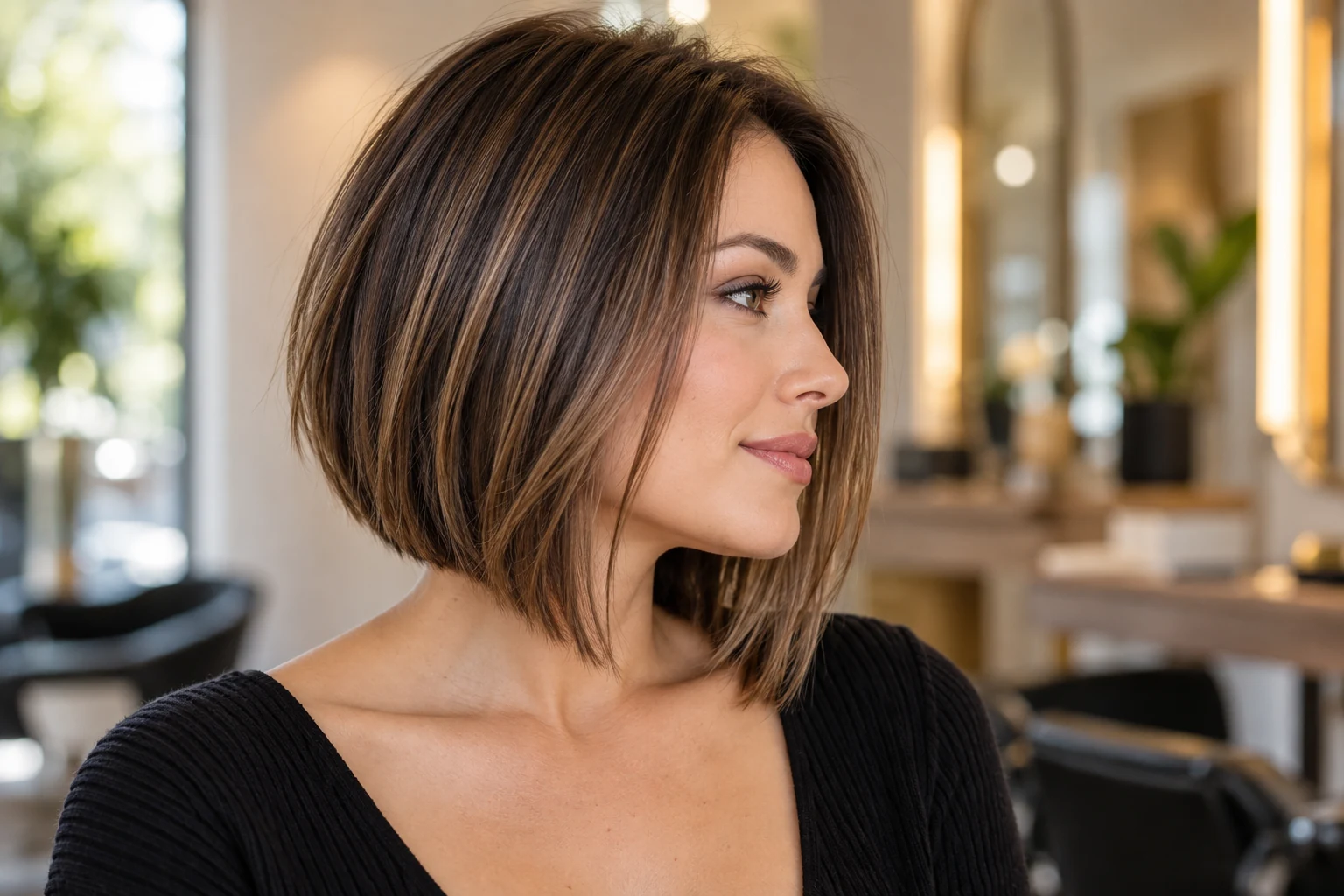
On straighter hair, a clear angle may be especially visible, but movement from ear tucking and collars still changes the arrangement. Check both sides while your head is in its normal position. Tilting the chin during a photo can make the angle look different.
Plan upkeep and a possible grow-out
Ask which part will change first as it grows: the nape line, the stacked back or the front length. If you later want a level outline, some shorter back sections will need time to reach it. Discuss what to preserve and what to trim during that transition.
Keeping the front long while repeatedly shortening the back maintains the angle. If your goal changes, tell the stylist so the maintenance plan changes too. Avoid expecting a single tidy-up to turn a strongly graduated cut into a uniform one-length bob.
A salon brief
“I want a [subtle/pronounced] inverted bob. Keep the dry front at [landmark] and the back at [landmark]. I want [little/visible] rounded graduation, with a [covered/soft/tapered] nape. I wear [normal texture], and I need [tuck or tie-back requirement]. Please show me the side and back before cutting.”
Compare more silhouettes in our haircut and hairstyle ideas and our 90s haircut guide.
Common questions
Does an inverted bob require an undercut?
No. An undercut is a separate decision about a shorter concealed or visible area beneath the rest of the cut.
Are inverted and stacked exactly the same?
The terms overlap in salon usage, but the angle and amount of graduation can differ. Confirm the actual back shape.
Can I wear it with curls?
Yes, with the dry silhouette and routine planned for your texture. Bring references that show curls from more than one angle.



Leave a comment