


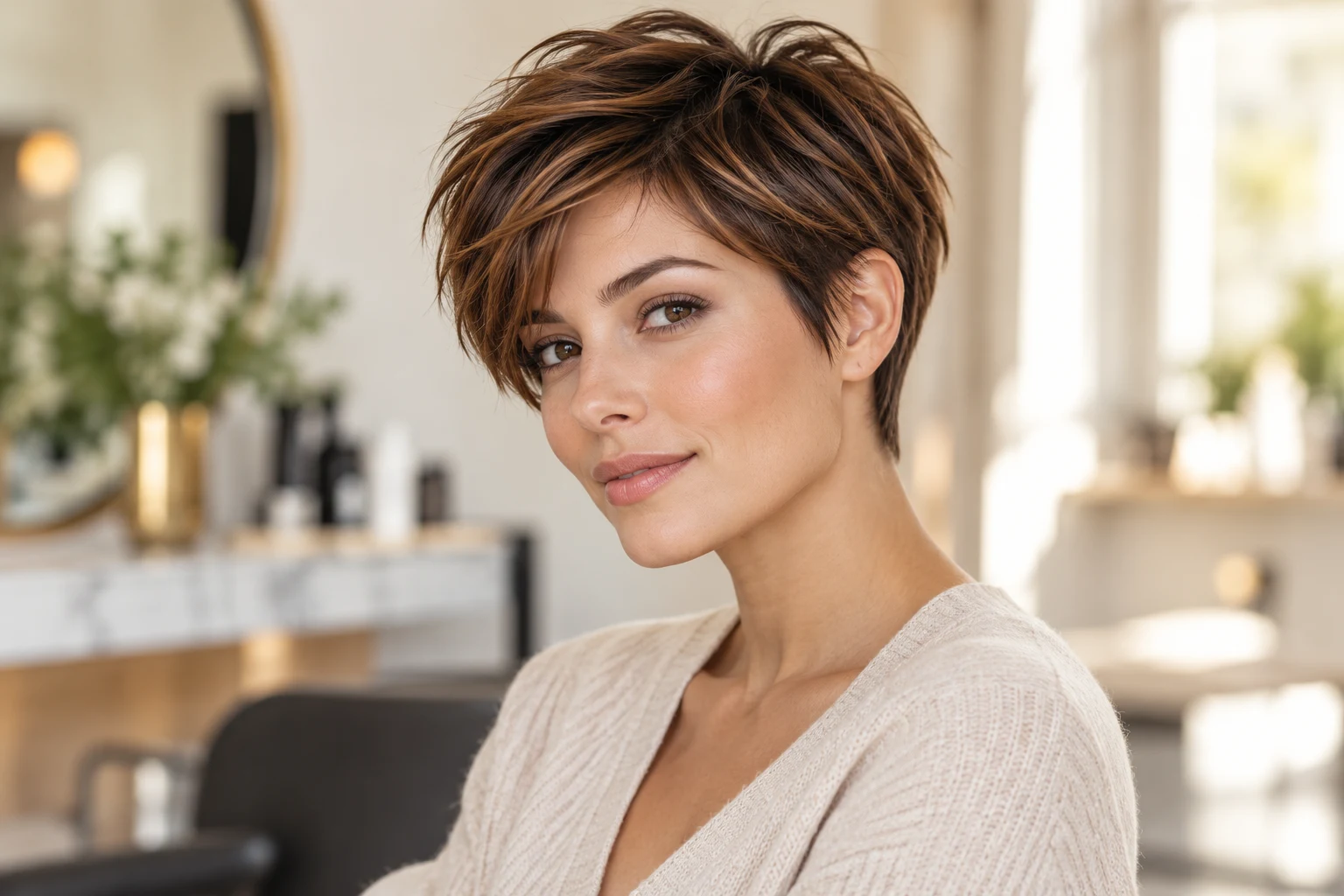
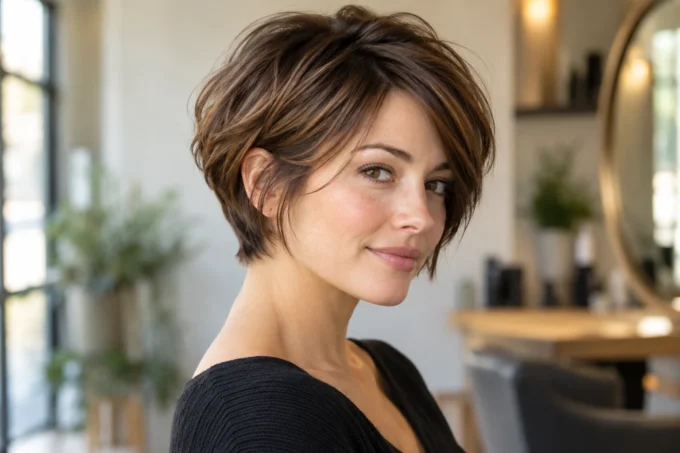
A pixie haircut usually keeps the sides and back short, with more length or shape through the top and fringe. It is a family of cuts rather than one fixed silhouette. The most useful choices are how much ear is exposed, where the fringe falls and how the nape is finished.
John Frieda’s pixie guide describes the familiar shorter-sides-and-back structure with a longer top. Your own version can be softer, closer, curlier or more disconnected. You do not need to copy the exact shape of a reference model’s head.
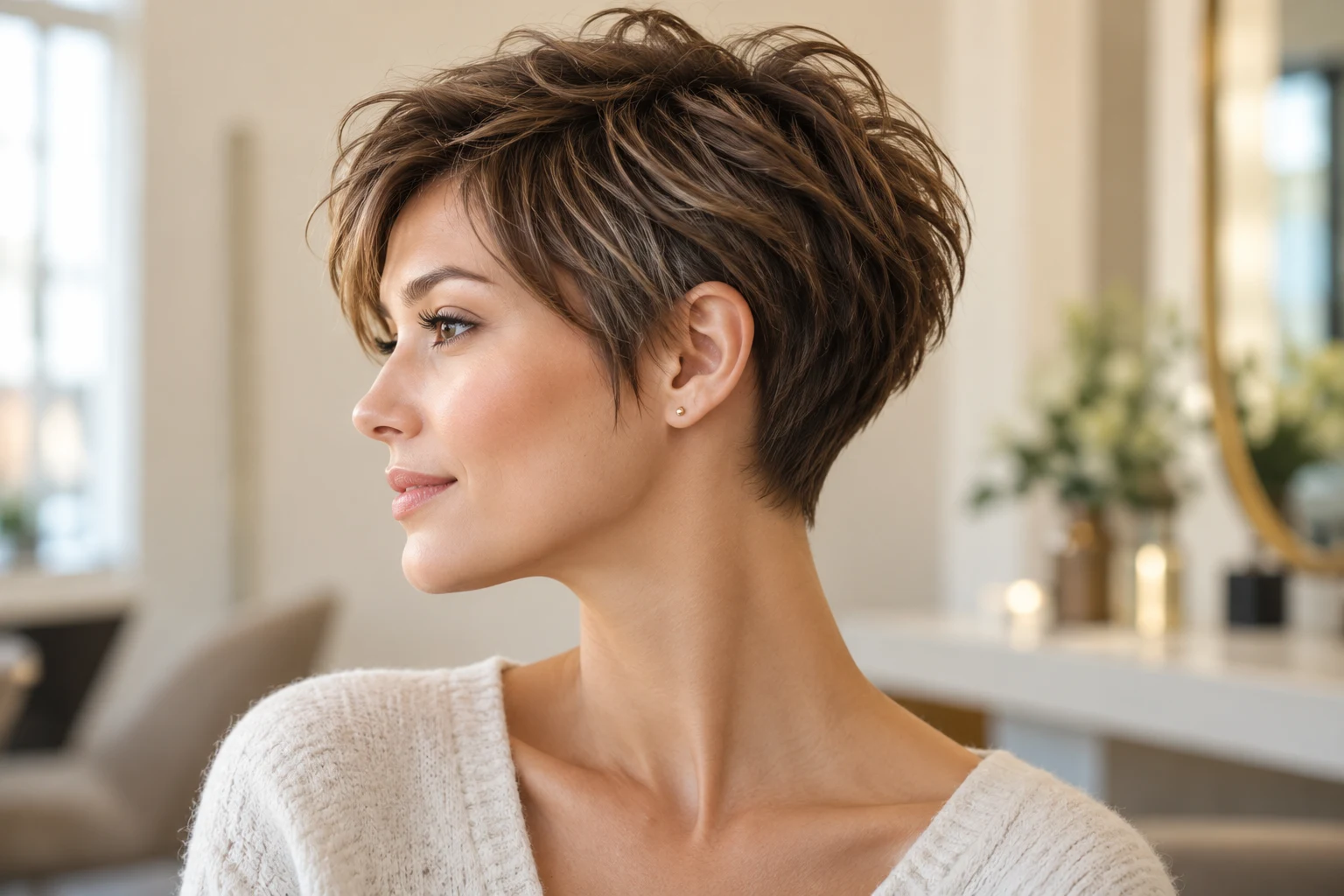
Decide on four visible zones
Fringe
Choose whether it should sit short of the eyebrows, sweep to one side or stay long enough for several directions. Show the stylist where it should land when dry. A longer fringe offers different arranging options, but it may also become the area you style separately each morning.
Ear coverage
Point to the amount of ear you want exposed. A close contour, soft wisps and longer side pieces can all sit under the word “pixie.” Include your glasses in the consultation if the arms change how the side pieces lie.
Crown
Explain whether you like a quiet rounded top, visible texture or deliberate height. Ask what your natural growth direction will do without a dryer. A short crown can reveal patterns that longer hair previously held down.
Nape
Choose a soft edge, a clear outline or a closer taper. Ask to see the back reference and how the neckline will look as it grows. This is often the part of the cut that needs a different maintenance decision from the longer front.
Use references for structure, not identity
Save one front view and one side or back view. Mark what you like in each: fringe, side length, crown or neck. A single close-up may hide an undercut or a very short nape.
Look for a similar everyday texture. If your reference is straightened but you wear natural curls, discuss the dry curl shape before agreeing on the shortest lengths. L’Oréal Paris includes curly pixies among short textured cuts, so straight hair is not a requirement.
Short hair does not have one maintenance level
Removing length can simplify some tasks while adding attention to the outline. A soft pixie that can change shape as it grows is a different commitment from a precise close taper with a sharp edge.
Ask for a demonstration of the routine you plan to use: air-drying, finger arrangement or a short dryer session. Discuss products by the finish you want and the label directions. There is no reason to buy several styling products before understanding which area needs control.
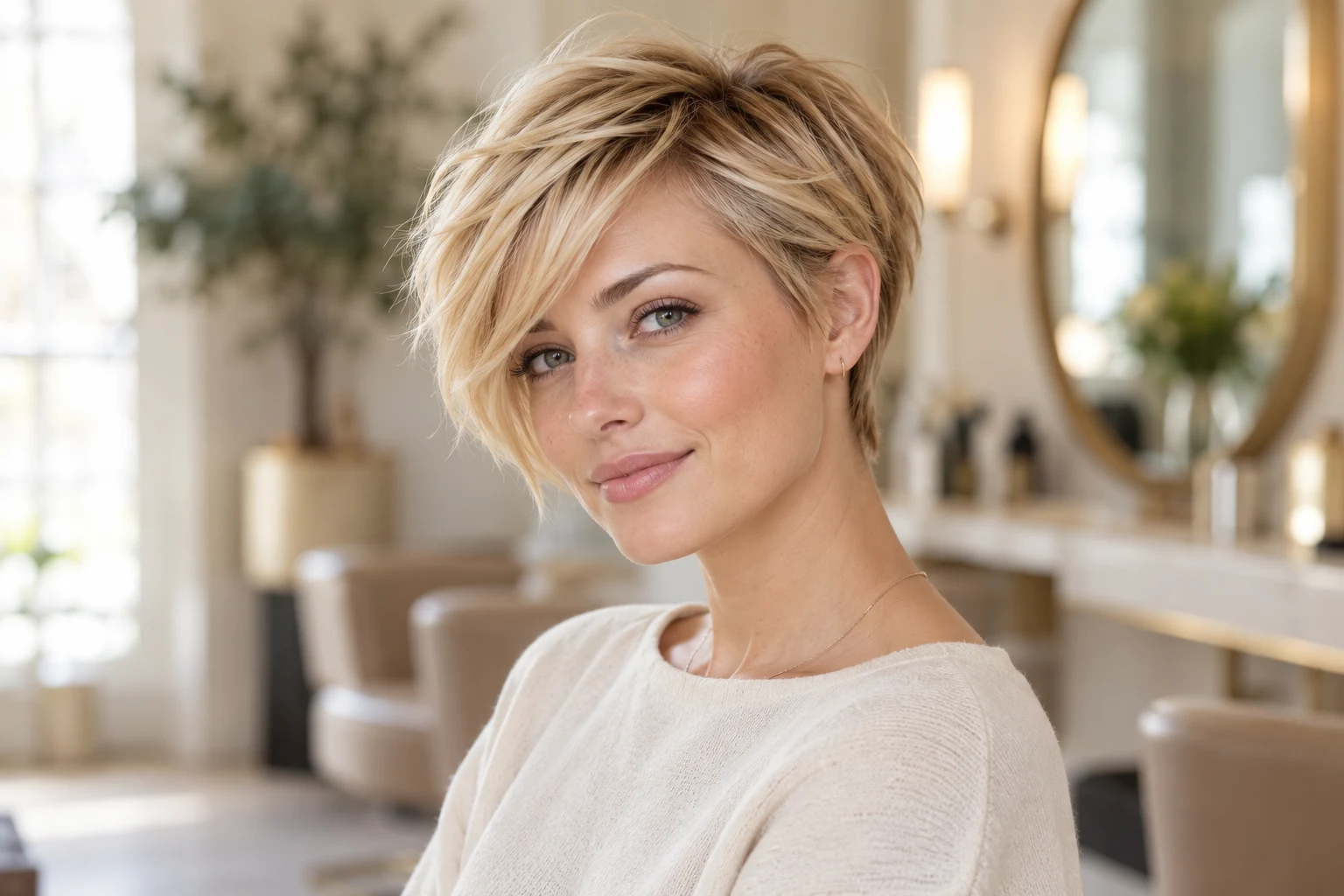
Questions for fine, dense and curly hair
- If keeping a full-looking shape matters: ask how much top length and perimeter weight should remain.
- If the sides feel bulky: point to the specific area instead of requesting thinning everywhere.
- If the hair curls: ask where the shortest curls will sit when dry and how the outline changes when stretched.
- If the crown changes direction: show it in its ordinary state and ask which lengths cooperate with it.
- If you want options: ask what the cut looks like pushed back, forward and to the side before choosing the fringe length.
These are consultation prompts, not a diagnosis of what your hair needs. The stylist can assess the actual density, growth patterns and existing cut.
Think about the next stage too
If you might grow it out, ask which zones will need to catch up. A short nape and long fringe do not become a bob at the same moment. Tell the stylist when your goal changes so maintenance does not keep removing the length you are trying to gain.
Use a visible maintenance trigger such as the fringe entering your eyes, the nape losing its outline or the side pieces sitting awkwardly against glasses. Ask for a plan tailored to that trigger rather than a promised universal trim schedule.
A salon brief you can use
“I want a pixie with the fringe at [dry landmark], the ears [exposed/partly covered], a [quiet/textured/lifted] crown and a [soft/defined/tapered] nape. I normally wear [texture] and want to style with [realistic routine]. Please explain any disconnected or shaved areas before cutting.”
For more short silhouettes, compare our haircut and hairstyle ideas. Our 90s Black women’s hairstyle guide includes short-cut inspiration alongside other styles.
Common questions
Is a pixie only for a certain face shape?
No. Discuss the silhouette you prefer and which features you want visible. Face shape does not grant or remove permission to wear a cut.
Does it require a shaved nape?
No. A soft scissor-cut outline is a separate option from a closer taper or undercut.
Will it be wash-and-go?
Only if the chosen structure and your normal texture give a finish you like that way. Ask for that specific demonstration.



Leave a comment